For a long time, the conversation around facial lifting operated in binaries. You either accepted what time was doing to your face, or you went under the knife. The treatments in between — threads, ultrasound, radiofrequency — filled a useful space but came with their own limitations: modest results, significant discomfort, or outcomes that didn’t hold long enough to justify the investment.
Endolift Laser doesn’t fit neatly into any of those categories. It’s not a topical treatment, not a surface device, and not a surgical procedure. It’s something genuinely different — a minimally invasive laser technique that works from inside the tissue, targeting the structural layer where laxity actually originates. The results it produces have made it one of the most talked-about treatments among patients who thought they’d exhausted their non-surgical options.
If you haven’t heard of Endolift yet, you will. And if you’re researching it now, this is the complete picture.
What Is Endolift Laser?
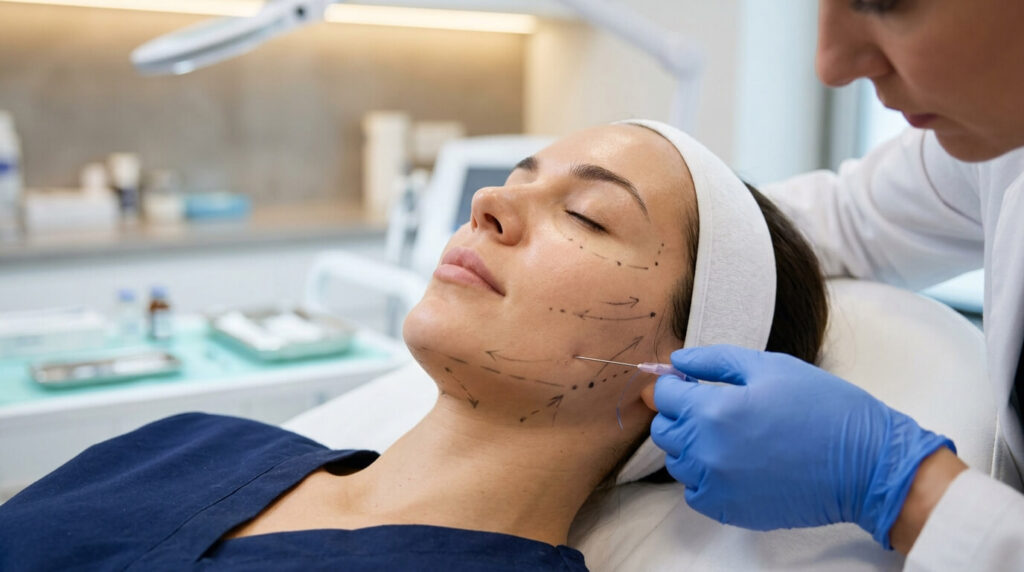
Endolift is a minimally invasive laser treatment that uses a hair-thin optical fiber — called a microoptic fiber — to deliver laser energy directly underneath the skin, into the subcutaneous tissue. The fiber is inserted through a tiny entry point, almost invisible to the naked eye, and moved beneath the surface to target the fibrous tissue and fat responsible for sagging, loss of definition, and volume redistribution that comes with age.
The laser energy delivered through the fiber does two things simultaneously. First, it produces immediate thermal contraction of the collagen fibers in the subdermal tissue — a tightening effect that begins in real time during the procedure. Second, it triggers a longer-term biological process: the stimulation of new collagen and elastin production that continues in the tissue for weeks and months following treatment. The result is both an immediate and a progressive improvement, which is rare in non-surgical aesthetics.
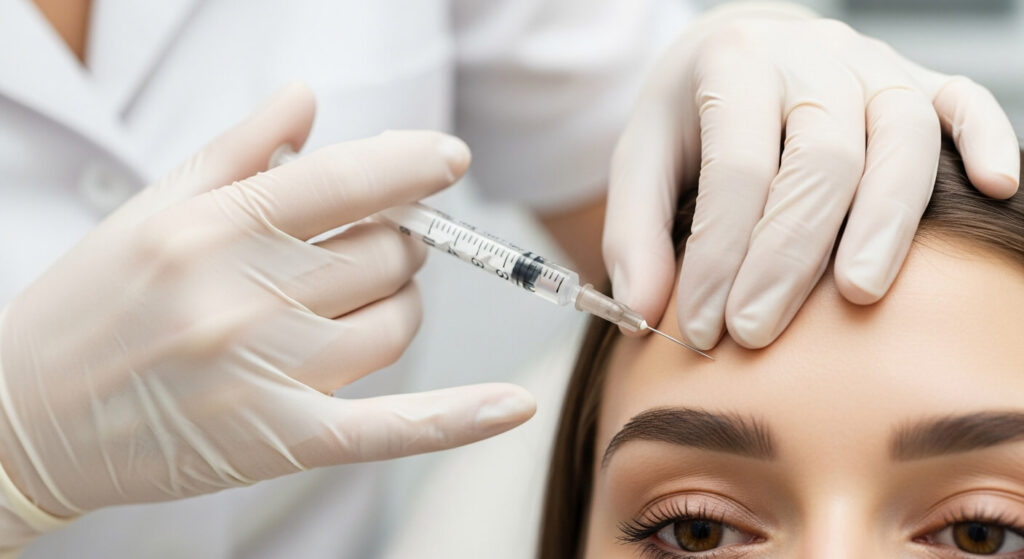
The procedure is performed under local anesthesia. There is no general anesthesia, no overnight stay, no surgical incisions, no sutures. Patients typically return home the same day, often within hours of the treatment being completed.
This is what sets Endolift apart from the category of energy-based devices that work from the outside in. Ultrasound and radiofrequency devices applied to the skin surface must transmit energy through multiple layers before reaching the target tissue, which limits the precision and intensity of what can be delivered without causing surface damage. Endolift works from inside the tissue itself, at the exact depth where the structural problem exists. The energy goes where it needs to go, without the anatomical barriers that limit external devices.
What Endolift Treats — and Why It Works Where Other Treatments Fall Short
The specific concerns Endolift addresses are ones that represent the most common frustrations among patients who have passed through the phase of surface treatments and want a meaningful structural improvement.
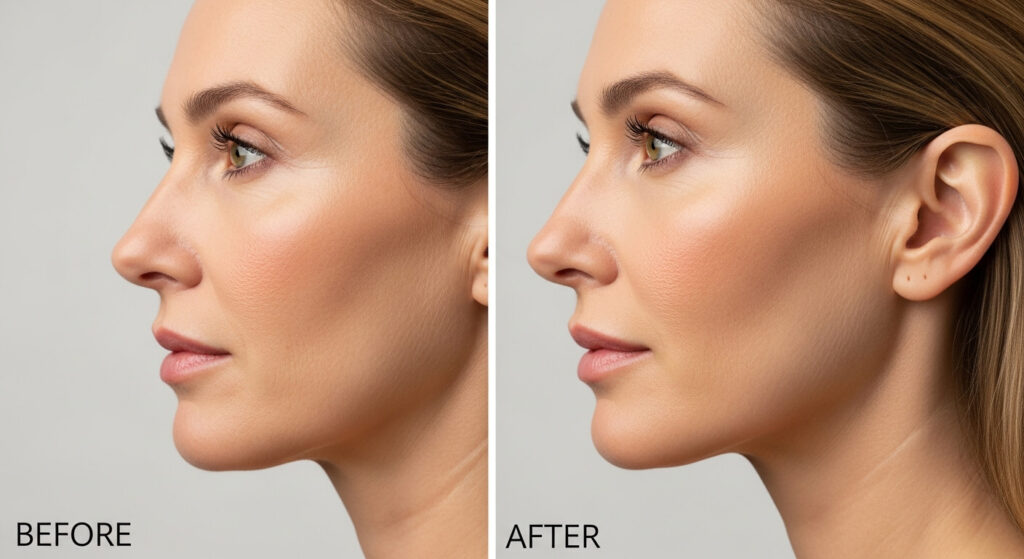
Jowling and loss of jawline definition. One of the most visible signs of facial aging is the softening of the jaw — the blurring of the line between face and neck, the downward migration of tissue that was once held firmly in place. Jowling occurs when the ligamentous structures and fibrous tissue that support the lower face weaken over time, allowing skin and fat to descend. Endolift delivers laser energy directly into this fibrous tissue, producing contraction and stimulating new collagen to rebuild the support structure. The result, over the following weeks and months, is a visibly sharper, more defined jawline.
Neck laxity. The neck is one of the earliest areas to show age and one of the most difficult to treat with external devices because the skin is thin and the tissue complex. Endolift is particularly well-suited to neck treatment because the precision of subdermal delivery allows the laser to address the tissue from within, producing tightening of the neck skin and improvement in the appearance of horizontal lines and vertical bands without the surface damage risk that high-energy external devices carry.
Under-chin fullness and submental fat. The area under the chin — commonly described as a “double chin” — involves a combination of submental fat and lax overlying skin. Endolift addresses both: the laser energy disrupts and contracts the fat tissue, while simultaneously tightening the overlying skin. This dual action produces a more refined contour beneath the chin and along the jawline that neither injectable fat-dissolving treatments nor skin-tightening devices alone can fully achieve.
Cheek and midface laxity. Volume loss and tissue descent in the midface is responsible for the flattening of the cheekbones, the deepening of nasolabial folds, and the general heaviness that can make the face look tired. Endolift in the midface lifts and reorganizes the soft tissue, improving facial contour and restoring the structural support that gives the upper face its definition.
Upper and lower eyelids. The periorbital area — the skin around and above the eyes — is extremely delicate, which makes it difficult to treat with external energy devices without risking surface damage. Endolift can be used to address mild upper eyelid hooding and lower eyelid laxity with a precision that external devices cannot offer. For patients who are not ready for blepharoplasty or who present with mild to moderate changes not yet warranting surgery, this represents a meaningful option that didn’t exist before.
Arms, abdomen, and other body areas. Endolift is not limited to the face. The same subdermal laser delivery can be applied to areas of skin laxity on the body — inner arms, abdomen, knees, inner thighs — where the combination of tightening and fat remodeling produces improvements in contour and skin quality that topical or external treatments cannot meaningfully address.
How Endolift Compares to the Alternatives
Endolift vs. Thread Lifting. Thread lifting uses absorbable sutures inserted beneath the skin to mechanically lift tissue and stimulate collagen around the thread. Results can be immediate and visible. However, threads do not address subcutaneous fat or produce the same depth of collagen remodeling as thermal laser energy. Results from threads typically last one to two years before the threads absorb and the tissue returns to its pre-treatment state. Endolift produces structural changes in the tissue itself — new collagen, reorganized fibrous structure — that persist significantly longer. For patients who’ve had threads and been underwhelmed by the longevity of results, Endolift represents a meaningful upgrade.
Endolift vs. Ultherapy / HIFU. High-intensity focused ultrasound targets the SMAS layer — the fibromuscular layer that surgeons work on during a facelift — and is often marketed as the non-surgical facelift. Clinical results are variable and the treatment is known for significant discomfort. Endolift works at the subcutaneous layer directly, addressing the fibrous tissue and fat with subdermal precision. Many patients and providers find Endolift’s results more consistent and more comfortable.
Endolift vs. Morpheus8. Morpheus8 is an outstanding treatment for skin texture, dermal collagen remodeling, and early-stage laxity. It works at the level of the dermis and shallow subdermal tissue through the surface of the skin. Endolift works deeper — inside the subcutaneous tissue — and from within, making it more effective for structural laxity, jowling, and contouring where the problem is below the dermal layer. These are complementary treatments used at different stages or for different aspects of the same patient’s goals, not direct competitors.
Endolift vs. Surgical facelift. This comparison is worth addressing honestly. A surgical facelift is the gold standard for significant facial aging — it physically repositions tissue, removes excess skin, and can address changes that no non-surgical treatment can fully replicate. Endolift is not a replacement for surgery in patients who are genuinely surgical candidates. What it offers is a meaningful, structurally significant alternative for patients with mild to moderate changes — those who aren’t ready for surgery, don’t want the recovery involved, or present with concerns that don’t yet require surgical correction. Many patients in their late 30s to mid-50s find themselves in exactly this category, and Endolift fills that space better than anything that existed before it.
The Procedure in Detail
Before treatment. A thorough consultation establishes what you’re hoping to address, reviews your medical history, and determines whether Endolift is the right approach for your specific anatomy and goals. The treatment areas are marked, and photographs are taken to document the baseline. Local anesthesia is administered to the treatment area — this takes a few minutes to take full effect and ensures the procedure itself is comfortable.
During treatment. The microoptic fiber is introduced through entry points that are barely visible — typically less than a millimeter. The fiber is moved beneath the skin in precise vectors, delivering laser energy into the target tissue. Patients are awake throughout and typically feel warmth and mild pressure but not significant pain. Depending on the areas being treated, the procedure takes between 30 and 90 minutes.
Immediately after. There will be some swelling and redness at the treatment sites. Mild bruising may appear in the days following treatment. These are normal responses to the thermal energy delivered in the tissue. Most patients can resume light daily activity within 24 to 48 hours, though more strenuous activity should be avoided for a short period as advised.
Recovery. Compared to surgical intervention, the recovery from Endolift is genuinely minimal. The majority of patients navigate a few days of mild swelling and perhaps some bruising, managed comfortably with cold compresses and standard aftercare. Social downtime varies — some patients are comfortable appearing in public within 2 to 3 days; others prefer a week. Detailed post-treatment care instructions are provided and followed up on throughout the healing period.
Results timeline. The immediate thermal contraction that occurs during the procedure produces early visible change — some patients notice tightening within the first few days as the initial swelling resolves. Over the following 2 to 6 months, the progressive collagen remodeling continues, refining and deepening the results. The final outcome is typically visible at around three to six months post-treatment and continues to hold well beyond that point.
What Makes Endolift Different From Everything Else
The fundamental difference is access. Every surface-based energy device — no matter how advanced — must transmit its energy through the epidermis and dermis before reaching the subcutaneous tissue where structural laxity originates. That transmission requires trade-offs: either limit the energy to protect the surface, or risk surface damage to deliver more at depth.
Endolift bypasses that trade-off entirely. The microoptic fiber is already inside the target tissue. The energy is delivered where it needs to go, at the intensity required to produce real structural change, with the surface completely protected.
This translates into results that external devices genuinely cannot replicate for moderate-to-significant laxity. The tightening is not theoretical or subtle — it’s visible, structural, and lasting.
The other differentiator worth naming is precision. The provider controlling the Endolift fiber determines exactly where the energy goes, at what depth, in what vectors. This is not a device that fires energy in a general direction and relies on statistics to produce an average result. It requires genuine skill, anatomical knowledge, and the clinical judgment to make real-time decisions throughout the procedure. In the right hands, this precision is what allows Endolift to produce natural, well-distributed results rather than the uneven tightening that can occur when a powerful treatment is applied without sufficient expertise.
Who Is a Good Candidate for Endolift?
Endolift occupies a specific and valuable clinical space. The patients who benefit most are typically those who:
Are in their late 30s to late 50s with mild to moderate facial laxity — jowling in early stages, a softening jawline, neck laxity, or midface descent — who are not yet surgical candidates or who have chosen not to pursue surgery.
Have found that external devices like HIFU, RF, or microneedling have produced limited results relative to their expectations.
Are dealing with submental fullness combined with skin laxity, where the combination of fat remodeling and tightening is the most effective approach.
Want a treatment with a realistic recovery timeline — not zero downtime, but nothing approaching surgical recovery — and results that develop progressively and hold over time.
Are prepared for a thorough consultation process and committed to following post-treatment care guidelines.
Endolift is not the first-line treatment for someone with early, surface-level concerns well addressed by skincare and light energy devices. It’s also not a replacement for surgery in patients with advanced laxity requiring significant tissue repositioning. For the patient in between — and there are many — it represents a transformative option that other treatments simply don’t offer.
The Importance of Choosing the Right Provider for Endolift
Endolift requires a higher level of technical skill and anatomical understanding than most non-surgical treatments. The fiber is moving inside the tissue. The provider must know precisely where they are, what structures are nearby, how the tissue is responding to the energy in real time, and how to distribute the treatment for a natural, balanced result.
This means that Endolift performed by a skilled, experienced provider and Endolift performed by someone with limited training are not the same treatment. The device is the same. What happens with it is not.
When evaluating providers for Endolift, the questions worth asking are not just about the device — they’re about clinical depth. How many treatments has this provider performed? Do they have the medical background to understand the anatomical considerations involved? What does their post-treatment follow-up look like? A treatment this precise, in tissue this sensitive, requires a provider who is genuinely accountable for the outcome — not just the procedure.
At Ervin Beauty, Endolift is approached with the same philosophy that governs every treatment Victoria Ervin performs: individualized assessment, precise execution, and genuine follow-through. Every patient receives the same provider from consultation to final result. Post-treatment support is not optional — it’s built into the process. The goal is not to perform a procedure. It’s to produce a result that a patient can see in the mirror and feel confident about.
Frequently Asked Questions
The procedure is performed under local anesthesia. Most patients experience warmth and mild pressure during treatment, not significant pain. The post-treatment period involves mild soreness and tenderness as the tissue heals, which resolves within a few days.
Because Endolift stimulates the production of new collagen and produces structural remodeling in the tissue, the results are genuinely long-lasting. Many patients maintain their results for several years. Aging continues over time, and some patients choose to repeat the treatment after several years to maintain their results, but this is far less frequent than with surface-based treatments.
When performed by a skilled provider, Endolift produces results that look like a better version of you, not a treated version of you. The tissue reorganizes and tightens in a way that reflects the natural structure of the face rather than pulling or distorting it. The most common feedback patients receive is that they look rested and refreshed — not “done.”
The entry points used for the microoptic fiber are extremely small — less than a millimeter — and heal without visible scarring in the vast majority of patients. They are typically placed in areas where they will not be conspicuous during the healing period.
Yes, and thoughtful combination planning often produces the most comprehensive results. Endolift can be sequenced with CO2 laser or Morpheus8 to address different layers of the tissue, and with biostimulators like Sculptra or Radiesse to complement the structural improvements with volume support. The timing and combination are determined individually based on goals and skin assessment.
Liposuction removes fat but does not address the overlying skin — which can worsen in appearance if fat is removed without corresponding skin tightening. Endolift addresses both simultaneously: the laser energy contracts and remodels the fat while tightening the skin above it. For mild to moderate submental fullness without significant excess fat volume, this combination approach often produces a more refined and natural result than fat removal alone.
Taking the Next Step
If you’ve been looking for a treatment that addresses genuine structural laxity — not a surface treatment, not something surgical, but something that actually works at the source of the problem — Endolift is worth a serious conversation.
The right starting point is a consultation that takes your specific anatomy, your concerns, and your goals seriously enough to give you an honest assessment of what Endolift can achieve for you and how it fits within a broader treatment plan.
Correction consultations are also available for patients who have had previous treatments elsewhere that didn’t produce the results they expected.