You’ve been getting Botox for a few years now. You know the routine. You book your appointment, you go in, you look refreshed for a while and then, somewhere between eight and ten weeks later, you start to notice the movement returning. By twelve weeks you’re fully back to baseline. You book again.
At some point, you start doing the math. The appointments are getting more frequent. The results feel less substantial than they did in the beginning. You’re spending more to maintain something that used to require less maintenance. And you start wondering whether this is just how Botox works — whether the diminishing returns and the accelerating schedule are simply the reality of neuromodulator treatment — or whether something else is going on.
For a significant number of patients, something else is going on.
The explanation isn’t complicated, but it’s not something the aesthetics industry talks about loudly. It has to do with what’s actually in the syringe when it reaches you — and whether that product is at full clinical concentration or has been diluted before it gets there.
How Botox Actually Works — and Why Concentration Matters
Botox is a brand name for botulinum toxin type A — a neurotoxin that temporarily blocks the nerve signals responsible for muscle contraction. When injected into a specific muscle, it prevents that muscle from contracting fully, which relaxes the overlying skin and reduces the appearance of the dynamic wrinkles formed by that muscle’s movement.
The effect is dose-dependent. The number of units injected determines how completely the muscle is relaxed and how long that relaxation lasts. This is why the unit count matters — not just as a billing metric, but as a direct determinant of clinical outcome.
Here is where dilution enters the picture.
Botox and other neuromodulators — Xeomin, Dysport, Jeuveau — are supplied by the manufacturer as a freeze-dried powder. Before use, the provider reconstitutes the powder by adding a specific volume of saline. The manufacturer’s guidelines specify a recommended reconstitution volume that produces a solution of standard clinical concentration.
A provider can reconstitute with more saline than recommended. The powder dissolves equally well regardless of how much saline is added. The resulting solution looks identical. But it contains fewer units of active toxin per milliliter. If a patient is quoted a certain number of units and injected with diluted product, they are receiving less active toxin than they believe they’re paying for — and less than is clinically required to produce a full, lasting result.
The math is straightforward. A vial of Botox reconstituted with twice the recommended saline volume, then injected at what appears to be the correct unit count, delivers half the active toxin. The result: reduced effect intensity and significantly shorter duration. Instead of lasting three to four months, results may last six to ten weeks. The patient comes back sooner, pays again, and the cycle continues — with the provider turning over more appointments and more product revenue, and the patient wondering why their results aren’t what they expected.
The Signs Your Botox May Be Diluted
There is no way for a patient sitting in a treatment chair to verify the reconstitution of the product being injected. The solution is clear. It’s drawn from a vial. It looks exactly as it should. The injection process feels the same. There is no sensory difference between properly prepared Botox and diluted Botox.
What there is, consistently, is a difference in outcomes.
Results that fade faster than expected. The clearest sign of underdosing — whether from dilution or from a genuinely insufficient unit count — is results that resolve significantly earlier than the standard clinical duration of three to four months. If you’re regularly returning to baseline at six to eight weeks, something is off. Occasional early fadeout can have other causes — intense exercise, high metabolism, certain medications — but if it’s your consistent experience, dosing should be examined.
Results that never fully settle. Full muscle relaxation from Botox typically completes at around two weeks post-injection, with the effect becoming most visible in that two-to-four-week window. If you’ve never experienced complete relaxation of the treated muscles — if there’s always some residual movement where there shouldn’t be — the treatment may not be reaching therapeutic dosing.
Asymmetry that develops between appointments. When product is diluted inconsistently across a vial, or when the effective dose is borderline for the areas being treated, some muscles may relax more completely than others even if they appear to receive the same unit count. This can produce asymmetry that wasn’t there before treatment and resolves as the product wears off — which is the opposite of what correctly dosed Botox should produce.
Increasing frequency of appointments over time. This one requires careful interpretation, because there are other reasons Botox duration changes over time — including the development of antibodies, which is a real but relatively uncommon occurrence. But if you’ve noticed a consistent trend toward shorter duration without any other explanation, and particularly if you’ve changed providers and noticed the pattern changing as well, dilution is worth considering.
The Antibody Question — and Why It’s Often Misattributed
When Botox stops working as well as it used to, the explanation most commonly offered is antibody development — the body’s immune system producing antibodies that neutralize the botulinum toxin before it can act.
This is a real phenomenon. Botulinum toxin resistance does occur. But several things are worth knowing about it.
First, true resistance to botulinum toxin type A is significantly less common than the frequency with which it’s invoked as an explanation. Studies suggest that clinically meaningful resistance occurs in a small minority of patients — estimates vary, but figures in the range of one to three percent of regular Botox users are frequently cited in the clinical literature.
Second, the risk of antibody development is associated with higher total doses and shorter intervals between treatments. A patient receiving appropriately dosed treatments at appropriate intervals has lower antibody risk than a patient being treated frequently with high doses. If diluted product is creating shorter duration and therefore more frequent appointments, the treatment pattern itself may be contributing to whatever antibody response develops.
Third — and most importantly — if you’ve experienced declining results with one provider but better results with another, antibody resistance is almost certainly not the explanation. Antibodies to botulinum toxin A are systemic; they don’t care who is holding the syringe. If changing providers restores your results, the issue was with the product or the technique, not with your immune system.
Other Reasons Botox Results Vary — and What’s Actually Controllable
Dilution is the most impactful controllable variable in Botox outcomes, but it’s not the only one. A complete picture of why results vary includes several factors — some on the provider’s side, some on the patient’s side.
Technique and placement. Botox injected at the wrong depth, in the wrong location within a muscle, or without accounting for individual anatomical variation produces suboptimal results regardless of concentration. The forehead, for example, is an area where small differences in injection point and depth produce significantly different outcomes — both in terms of how well the target muscle is relaxed and in whether the brow position is affected as an unintended consequence. Skilled technique means understanding the three-dimensional anatomy of each treatment area, not just knowing the standard injection map.
Unit count. Beyond dilution, underdosing in terms of absolute unit count produces results that are incomplete and short-lived. There are standard dosing ranges for common treatment areas — typically 20 to 30 units for the forehead complex, for example — but individual anatomy varies significantly. A patient with stronger-than-average corrugator muscles needs more product to achieve the same degree of relaxation as a patient with lighter musculature. Cookie-cutter unit counts produce inconsistent results across different patients even with identical product concentration.
Patient metabolism. Botox duration does vary between patients. Higher metabolic rates — associated with intense athletic training, in particular — are correlated with faster breakdown of botulinum toxin. This is a genuine patient-side variable, though it’s often overused as an explanation for results that are actually being limited by product or technique.
Muscle strength and habit. Patients who habitually use their facial muscles very expressively, particularly in areas like the forehead and between the brows, may need more product and more frequent treatment than patients with less habitual muscle activity. This is not a failure of the treatment — it’s an individual factor that a skilled provider accounts for in dosing.
Treatment interval. There is a body of evidence suggesting that consistent, appropriately timed Botox treatment — before the muscle has fully recovered — can contribute to gradual muscle weakening over time, which may actually extend the duration of results in the long term. Patients who return before full recovery may eventually find that their results last longer. Conversely, allowing the muscle to return to full strength between treatments maintains or resets that baseline.
What Changes When You Work With a Provider Who Doesn’t Cut Corners
The difference between Botox treatment at a clinic that maintains full product concentrations and one that doesn’t is not theoretical. Patients who move from one to the other notice it.
Results settle more completely. The two-week assessment — when the full effect of properly dosed Botox should be visible — actually shows complete relaxation of the treated muscles rather than significant residual movement. The result looks like the result, not like a partial version of it.
Results last longer. Three to four months of genuine effect, rather than six to eight weeks of something that fades before it fully arrived.
The appointment schedule normalizes. Rather than returning every two months because results have dissolved, patients can maintain comfortable intervals. This has practical implications for the total investment in treatment over time — fewer appointments to achieve the same maintained result is, by definition, more cost-effective even if the per-appointment cost is higher.
The relationship with treatment itself changes. When Botox works the way it should work, the experience is satisfying rather than frustrating. Patients who have spent years feeling like Botox “doesn’t work for them” — or works briefly and inadequately — often discover, with a provider who doses correctly, that their issue was never with the treatment. It was with what they were receiving.
Botox at Ervin Beauty: The Standard Behind the Treatment
At Ervin Beauty, neuromodulator treatments — Botox and Xeomin — are performed using full, undiluted concentrations. This is not a marketing claim that can be verified from the outside, which is precisely why the reputation and clinical philosophy of the provider matters more than any stated policy.
Victoria Ervin’s approach to Botox is not as a standalone commodity treatment but as a precision complement within a comprehensive plan. Botox and Xeomin at Ervin Beauty are recommended and dosed based on individual anatomy — the strength of the target muscles, the patient’s treatment history, their aesthetic goals, and how neuromodulator treatment fits alongside other procedures in a broader plan.
The goal is never to administer the minimum amount that produces a visible result. It’s to administer the appropriate amount that produces a complete, lasting result — and to do so in a way that looks natural rather than frozen. These are different targets, and reaching the right one requires clinical judgment that goes beyond following a standard injection map.
Post-treatment follow-up is part of the process. If results aren’t settling as expected at two weeks — if there’s asymmetry or insufficient relaxation in a treated area — that’s a conversation to have, not a surprise to manage alone. The relationship between patient and provider doesn’t end at checkout.
Botox vs. Xeomin: Is There a Clinical Difference?
Both Botox (onabotulinumtoxinA) and Xeomin (incobotulinumtoxinA) are botulinum toxin type A products. Their mechanism of action is identical. The practical differences are worth understanding.
The primary distinction is that Xeomin is a “naked” neurotoxin — it doesn’t contain the complexing proteins that are present in Botox. The clinical significance of this is debated, but some providers and patients find that Xeomin is associated with a lower risk of antibody development over time, since the immune response may be partly directed at the complexing proteins rather than the active toxin itself. For patients who have experienced declining results with Botox and want to explore whether an immune response may be contributing, switching to Xeomin is a reasonable clinical consideration.
In terms of onset, duration, and results, Botox and Xeomin are clinically comparable for most patients in most treatment areas. The choice between them is made based on patient history, preferences, and the provider’s clinical assessment.
The Treatments That Work Alongside Botox — and When They Add More Value
One of the most useful reframes in aesthetic medicine is moving away from the idea that Botox is a complete anti-aging strategy and toward understanding it as one specific tool for one specific problem: dynamic wrinkles caused by muscle movement.
For the lines between the brows, the forehead lines, the crow’s feet — these are dynamic wrinkles, formed by repetitive muscle contraction over decades. Botox addresses them directly and effectively. It does nothing for the structural changes occurring beneath the skin — the loss of collagen and elastin, the redistribution of facial fat, the changes in bone density that alter the three-dimensional structure of the face over time.
This is not a criticism of Botox. It’s a clarification of what it does. A hammer is excellent for nails. The face has more than nails.
The treatments that address what Botox doesn’t include:
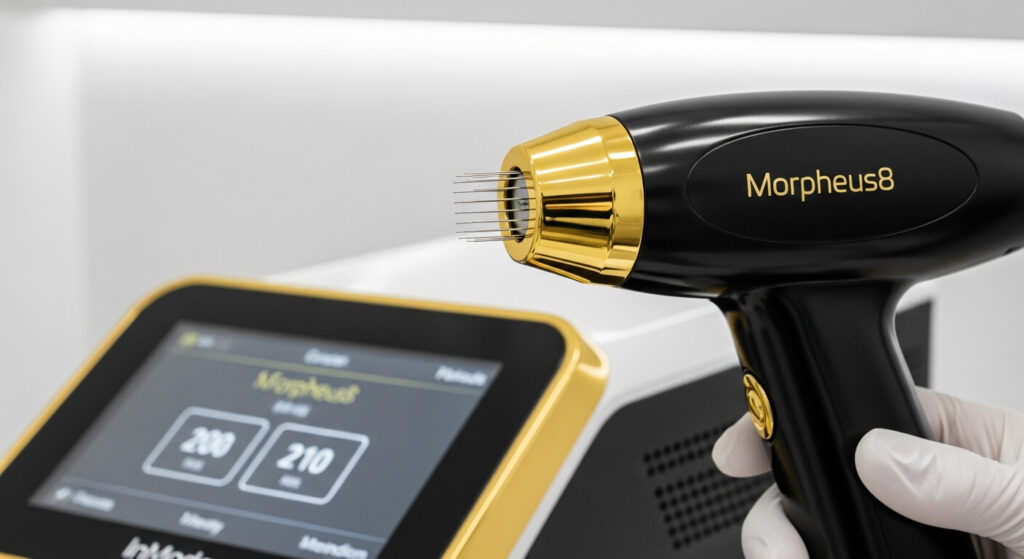
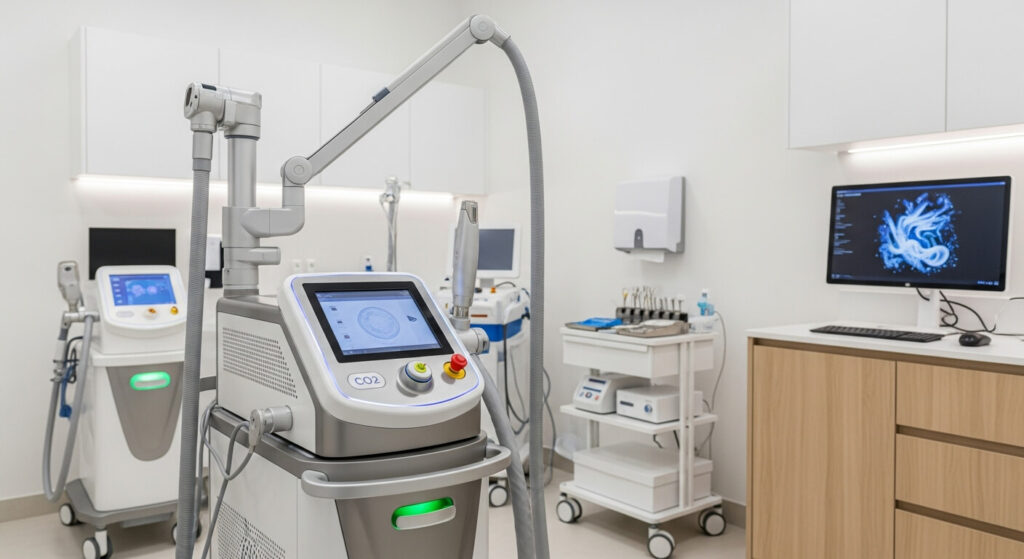
Morpheus8 and CO2 laser for collagen remodeling and skin quality improvement — addressing the structural changes in the dermis that Botox has no mechanism to reach.
Sculptra and Radiesse for rebuilding the collagen framework that supports the skin from beneath — addressing volume loss and structural aging at a biological level.
PRP and PRF for tissue regeneration in specific areas — restoring vitality to skin that has lost structural integrity.
Skinboosters for deep hydration and superficial skin quality improvement.
The most satisfying aesthetic outcomes come from understanding which problem each treatment is actually solving and building a plan that addresses all of the relevant problems with the right tools. A provider who recommends Botox as the answer to every concern, or who defaults to filler when structural regeneration is what the face needs, is not serving the patient’s actual interests — regardless of how skilled their injection technique may be.
What to Ask Before Your Next Botox Appointment
If you’ve been experiencing the patterns described in this article — results that fade faster than expected, incomplete relaxation, an accelerating appointment schedule — these are reasonable questions to raise with any provider before treatment:
What reconstitution volume do you use for Botox? The manufacturer-recommended volume for Botox is 2.5ml of saline per 100-unit vial, producing 4 units per 0.1ml. Providers using significantly more saline than this are diluting the product.
How do you determine my unit count? The answer should reference your individual anatomy — the strength and location of your muscles, your treatment history — rather than a flat standard number applied to everyone.
What’s your protocol if I’m not happy with my results at two weeks? A provider who has a clear, accessible answer to this question is one who takes the outcome seriously, not just the procedure.
What other treatments might address my concerns more effectively? If the answer is always more Botox, that’s worth paying attention to.
Frequently Asked Questions
How do I know if my Botox is diluted? You can’t verify it directly. What you can do is pay attention to results: duration shorter than three months consistently, incomplete relaxation at two weeks, and results that vary significantly between providers are all patterns consistent with underdosing, whether from dilution or insufficient unit count.
Can I develop immunity to Botox? True botulinum toxin A resistance exists but is uncommon — estimates suggest it affects a small minority of regular Botox users. If your results have declined, particularly if changing providers restores them, the issue is almost certainly not antibody resistance.
Does Botox help with static wrinkles — lines visible at rest? Botox addresses dynamic wrinkles — those formed by muscle movement. Static wrinkles that are visible at rest require different treatment approaches: skin resurfacing (CO2 laser, Morpheus8) for texture and dermal collagen, biostimulators for structural support. A combination approach is typically most effective.
How often should I realistically need Botox? With properly dosed treatment, most patients maintain results for three to four months. Some patients — particularly those with lower baseline muscle activity — find results lasting longer. Appointments more frequent than every ten to twelve weeks on a consistent basis suggest the dosing or concentration should be examined.
Is Botox safe long-term? Botox has a long clinical history and an established safety profile. Long-term use does not damage the skin and may, in fact, contribute to gradual improvement in wrinkle depth over time as the repeatedly relaxed muscles weaken and the overlying skin has extended periods of reduced crease formation.
What’s the difference between Botox and Dysport? Both are botulinum toxin type A products. Dysport diffuses more widely from the injection point, making it suitable for larger areas like the forehead but requiring more precision in delicate areas. Unit equivalencies differ from Botox — they are not interchangeable on a one-to-one unit basis. Provider preference and patient history guide the choice between them.