Chemical peels have been part of aesthetic medicine longer than almost anything else in the category. They predate lasers by decades, predate injectables by centuries in their most basic forms, and have outlasted countless treatments that came along claiming to do the same thing better. The reason they’ve persisted is simple: they work, and they work across a range of concerns and skin types in ways that other treatments don’t fully replicate.
What many patients don’t have is a clear picture of what “chemical peel” actually means — because the term covers an enormous range of treatments, from superficial lunchtime procedures that produce a mild glow to deep single-session treatments that require two weeks of recovery. These are not the same thing with the volume turned up. They work through different mechanisms, address different concerns, and carry different risk profiles. Understanding the distinctions is the difference between choosing a treatment that fits your situation and ending up with something that doesn’t.
How Chemical Peels Work
All chemical peels work by applying a chemical agent to the skin that causes controlled damage to a specific depth of the skin tissue. The body responds to this damage with a healing process that replaces the damaged cells with newer, healthier ones. The depth to which the damage extends determines what the peel addresses and what the recovery looks like.
The epidermis — the outermost layer of the skin — sits above the dermis. Superficial peels damage only the epidermis. Medium-depth peels reach the upper dermis. Deep peels penetrate into the mid-dermis. As depth increases, the collagen-stimulating response becomes stronger, the concerns addressable become more significant, and the recovery required becomes longer.
The chemical agents used differ by the depth they achieve, their mechanism of action, and the concerns they’re most appropriate for. Understanding the main categories and their clinical profiles gives a clearer picture of what you’re actually choosing between.
Superficial Peels: Alpha and Beta Hydroxy Acids
Superficial peels work in the epidermis. They remove accumulated dead cells, stimulate cell turnover, improve surface texture, address mild pigmentation, and leave the skin looking clearer and more even. The recovery is minimal — mild redness and some flaking over a few days — and the treatments can be done regularly as part of a maintenance routine.
Alpha hydroxy acids (AHAs) include glycolic acid and lactic acid, among others. Glycolic acid, derived from sugar cane, has the smallest molecular size of the AHAs, which allows it to penetrate the skin effectively. It works by dissolving the bonds between dead skin cells, accelerating exfoliation, and stimulating fibroblasts — the cells responsible for collagen production — at even superficial concentrations. At higher concentrations or with longer contact time, glycolic acid penetrates deeper and produces a stronger response.
Lactic acid, derived from milk, is a gentler option that also provides some hydrating effect alongside its exfoliating action. It’s well-suited to sensitive skin and patients who find glycolic acid irritating.
The concentration of AHA and the pH of the formulation together determine the peel’s activity. A 30 percent glycolic acid solution at a pH above 3.5 behaves quite differently from 70 percent glycolic at pH 1.0 — the latter is a significantly more aggressive clinical treatment even though the acid type is the same.
Beta hydroxy acids (BHAs) — primarily salicylic acid — are lipid-soluble, which means they can penetrate into the sebaceous follicle. This makes them particularly effective for oily, congested, and acne-prone skin. Salicylic acid exfoliates within the pore, reducing comedones and inflammatory lesions in ways that oil-soluble penetration enables and water-soluble AHAs cannot match.
A salicylic acid peel is often the right choice for patients dealing with breakouts, enlarged pores, and oily skin texture. The anti-inflammatory properties of salicylic acid also make it useful for mild acne scarring and post-inflammatory hyperpigmentation, which are common in skin that has experienced recurrent breakouts.
Mandelic acid is an AHA with a larger molecular size than glycolic, which means it penetrates more slowly. This makes it a gentler option that retains many of glycolic’s benefits — stimulating cell turnover, improving tone and texture — with a lower risk of irritation. It’s also more appropriate for darker skin tones because the slower penetration reduces the risk of triggering post-inflammatory hyperpigmentation that can occur when aggressive acids cause inflammation in melanin-rich skin.
Medium-Depth Peels: TCA and Combination Approaches
Medium-depth peels penetrate into the upper dermis. Because they reach the structural layer of the skin rather than just the surface, they address concerns that superficial exfoliation cannot: deeper pigmentation, moderate textural irregularities, fine lines, and early sun damage. The recovery is more significant — typically five to seven days of visible peeling and some redness — and the results are proportionally more impactful.
TCA (trichloroacetic acid) is the workhorse of medium-depth peeling. Applied to the skin, TCA causes a protein precipitation in the tissue — a “frosting” reaction that is used by the provider to assess depth and uniformity of penetration. The concentration of TCA used (typically 15 to 35 percent for medium-depth work) and the number of passes determine how deeply the peel penetrates.
At 20 to 30 percent concentration, TCA penetrates to the upper papillary dermis, stimulating collagen production that continues for months after the peel. The improvement in fine lines, surface texture, and pigmentation can be significant, and results from a well-executed medium TCA peel are durable — lasting considerably longer than the cumulative effect of multiple superficial treatments.
TCA peels require significant experience to perform well. The endpoint — the degree of frosting, its uniformity across the treatment area, and the timing of neutralization — is assessed visually and requires clinical judgment that comes from experience. The same agent produces very different results depending on skin preparation, application technique, and the provider’s skill in reading the tissue’s response.
Jessner’s solution is a combination of resorcinol, lactic acid, and salicylic acid in ethanol, originally formulated by dermatologist Max Jessner in the early 20th century. It’s frequently used as a priming layer before TCA to enhance the penetration and uniformity of the TCA peel — the Jessner’s + TCA combination is one of the most established protocols for achieving reliable medium-depth results with a safety profile that is well-documented.
The Modified Obagi Blue Peel combines TCA with a blue base that allows the provider to track application coverage accurately. Developed as a way to standardize TCA peel delivery, it produces consistent medium-depth results and has a strong track record in photoaged and pigmented skin.
Deep Peels: Phenol
Deep peels penetrate into the mid-dermis, producing the most dramatic skin transformation of any chemical peel — and the most significant recovery and risk profile. They’re performed in controlled clinical settings with appropriate precautions, and they’re not appropriate for every patient or every provider.
Phenol is the active agent in deep chemical peels, most famously in the Baker-Gordon formula that was the dominant deep peel protocol for decades. Phenol penetrates deeply into the dermis and produces significant collagen remodeling, dramatic improvement in deep lines and wrinkles, and a lasting improvement in skin texture and tone.
The systemic absorption of phenol requires cardiac monitoring during treatment, and the recovery — two to four weeks of significant healing, prolonged pink/red coloration, and strict sun avoidance for months — is substantial by any measure. The patient demographic for deep phenol peels has narrowed considerably as CO2 laser resurfacing has provided an alternative route to comparable results with better-controlled depth and fewer systemic concerns. For the right patient with the right expectations and the right provider, deep phenol peels remain clinically relevant — but they represent a significant commitment.
Skin Preparation: Why It Matters More Than Patients Expect
Skin preparation before a chemical peel — particularly a medium or deep peel — is not an optional add-on. It directly affects how evenly the peel penetrates, how predictably the result develops, and how the skin heals afterward.
The standard preparation protocol for medium-depth peels typically involves four to six weeks of topical retinoid use before treatment. Retinoids (vitamin A derivatives — tretinoin being the most commonly prescribed) accelerate cell turnover in the epidermis, thinning the stratum corneum and producing a more uniform baseline for chemical penetration. Skin that has been properly primed with retinoid shows more even peel uptake than unprimed skin, which means more uniform results and fewer patchiness issues after healing.
Hydroquinone — a topical agent that suppresses melanin production — is sometimes included in pre-peel preparation for patients with existing hyperpigmentation or darker skin tones. By reducing background melanin production before treatment, hydroquinone reduces the risk of post-inflammatory hyperpigmentation during the healing process.
Some providers also use topical vitamin C in the preparation phase as an antioxidant support. The specific preparation protocol is customized to the patient’s skin type, the peel being performed, and what concerns are being addressed.
Chemical Peels and Skin Tone: An Important Distinction
The relationship between chemical peels and skin tone deserves specific discussion because it’s one of the areas where inadequate provider knowledge most commonly leads to poor outcomes.
Melanocytes — the cells that produce melanin — respond to inflammation by increasing pigment production. This is post-inflammatory hyperpigmentation (PIH), and it’s more common and more pronounced in patients with higher baseline skin melanin (Fitzpatrick types III through VI). Any treatment that causes inflammation — and chemical peels, particularly medium and deep ones, definitely do — carries a risk of triggering PIH in susceptible patients.
This does not mean that patients with darker skin tones cannot benefit from chemical peels. It means that acid choice, concentration, preparation, and aftercare are more critical for these patients than for those with lighter skin. Mandelic acid and lower-concentration salicylic acid peels are appropriate first-line options for many patients with darker tones. Modified Jessner’s protocols can be carefully applied. TCA requires particular caution and typically should only be used by providers with specific experience treating darker skin tones.
A provider who applies the same peel formulation and protocol to every patient regardless of skin tone is not serving darker-skinned patients well, and the risk of PIH from an inappropriate peel is a significant and lasting complication. Choosing a provider who demonstrates genuine knowledge of this clinical nuance is particularly important if your skin is medium to deep.
Chemical Peels vs. Laser Resurfacing: When to Choose Which
Chemical peels and laser resurfacing are often discussed as competing approaches to the same concerns. The reality is more nuanced — they address overlapping but distinct territories, and the right choice depends on what the patient needs.
Superficial and medium chemical peels are excellent for regular maintenance, pigmentation correction, acne-prone skin, and patients for whom minimal downtime is a priority. A well-executed series of medium TCA peels over time produces meaningful improvement in skin quality and tone.
CO2 laser resurfacing outperforms medium chemical peels for deep texture irregularities, acne scarring, and collagen-building skin tightening — it reaches deeper into the dermis with more controlled energy delivery than acid penetration allows, and the ablative component removes surface damage more completely. For patients with significant photodamage, textural concerns, or structural issues with the skin, CO2 laser typically produces superior results.
The two approaches are not mutually exclusive. Chemical peels at appropriate intervals can be part of the maintenance routine for patients who have undergone CO2 resurfacing, supporting and extending the results of the laser treatment. Combining them in the right sequence, at the right intervals, produces better long-term skin health than either approach alone.
What Happens After a Chemical Peel
The healing process after a chemical peel follows a predictable pattern that depends on the depth of the peel.
After a superficial peel, patients typically experience mild redness for a few hours and some flaking over the following two to four days. Skin feels tight and may look slightly shiny as the new surface emerges. Makeup can usually be worn the following day.
After a medium-depth peel, the first two to three days involve visible redness, swelling (particularly around the eyes), and the beginning of peeling. Days three through seven typically involve significant peeling as the damaged epidermis and upper dermis shed. The temptation to pull or scrub at the peeling skin must be resisted — the tissue beneath is actively healing and interference compromises results and increases the risk of scarring or pigmentation changes.
After a deep peel, the recovery is more intensive and involves medical-grade wound care, careful monitoring, and a period of strict sun avoidance that extends months beyond the initial healing. Full recovery from a deep peel is measured in weeks, with pinkness and sensitivity persisting for longer.
Across all depths, sun avoidance during healing and consistent SPF use afterward are non-negotiable. Sun exposure during healing can trigger pigmentation changes in the vulnerable new skin; ongoing sun exposure after healing degrades the improvements the peel achieved.
Frequently Asked Questions
Superficial peels can be done every two to four weeks as part of a regular treatment schedule. Medium-depth peels are typically performed once or twice a year. Deep peels are generally a one-time or very infrequent treatment.
It depends on the type of acne and the type of peel. Salicylic acid peels are well-suited to mild-to-moderate inflammatory acne and comedonal acne, reducing breakouts and clearing congestion over a series of treatments. They’re less effective for severe nodular or cystic acne, which typically requires systemic treatment.
Yes, with appropriate selection of peel type and preparation. Mandelic acid and lower-concentration salicylic acid peels are good starting points for patients with darker skin tones. Proper pre- and post-treatment skincare significantly reduces the risk of post-inflammatory hyperpigmentation.
Home skincare products typically contain AHAs and BHAs at concentrations well below clinical levels, with higher pH values that further reduce their activity. They produce gradual, mild exfoliation over time. Clinical peels use significantly higher concentrations, lower pH formulations, and are applied in controlled conditions that amplify the skin’s response substantially.
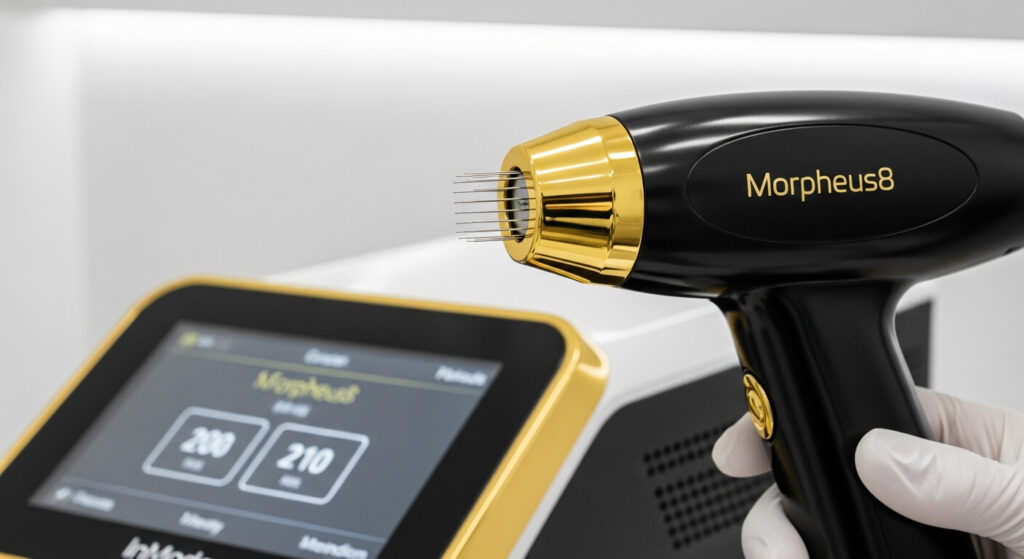
Yes, and combination planning can produce synergistic results. A series of superficial peels alongside skinboosters supports overall skin quality. Medium-depth peels can complement Morpheus8 in a sequenced plan. Peels and CO2 laser are typically separated by an appropriate interval rather than combined in the same session.
Very light superficial peels with minimal recovery can be a useful regular maintenance treatment for patients with mild concerns who want to improve skin brightness and tone without downtime. Managing expectations is the key: they produce subtle, cumulative improvement rather than dramatic single-session results.