There is a category of skin concern that sits just outside what most aesthetic treatments are designed to address. Not wrinkles, not volume loss, not pigmentation or redness or structural laxity. Something more subtle and more pervasive than any of those — a quality issue that affects the skin globally rather than in specific locations. The skin looks tired. It lacks the plumpness and luminosity it used to have. It feels dry regardless of how much moisturizer is applied. Fine lines are more visible not because the underlying muscle is moving more, but because the skin itself has lost the internal hydration and structural integrity that used to keep it smooth.
This is what happens when the hyaluronic acid content of the dermis declines — and it begins declining in most people in their late 20s, accelerating with sun exposure, environmental stressors, and the natural progression of time. The skin’s own reservoir of moisture and structural support gradually depletes, and the results are visible in a way that no topical product can fully reverse, because topical hyaluronic acid — however well-formulated — cannot penetrate to the dermal layer where the real work needs to happen.
Skinboosters deliver hyaluronic acid directly into the dermis. Not as a filler that adds volume in a specific location, but as a hydration and biostimulation treatment that restores the skin’s internal environment across the entire treated area. The results look and feel different from anything a serum or cream can produce — because they’re operating at a depth that topical products fundamentally cannot reach.
What Skinboosters Are — and What Makes Them Different From Filler
The confusion between skinboosters and traditional dermal fillers is understandable. Both are hyaluronic acid injectables. Both are administered by needle. Both have their origins in the same category of aesthetic treatment.
But they work differently, look different under the skin, and produce different results — and understanding the distinction matters for anyone trying to figure out which treatment actually addresses their concern.
Traditional dermal fillers use cross-linked hyaluronic acid — hyaluronic acid molecules that have been chemically bonded to each other to create a dense, cohesive gel. This cross-linking is what gives fillers their structural properties: the ability to occupy space, create lift, and maintain shape in the tissue. When filler is injected into the cheek, it creates a bolus of firm gel that physically adds volume. This is its purpose and its strength — and its limitation. Filler is a structural tool, not a hydration tool.
Skinboosters use hyaluronic acid that is either lightly cross-linked or completely uncross-linked — a much softer, more fluid formulation that disperses through the dermal tissue rather than staying in one place. When injected into the superficial dermis through multiple small injection points, it spreads through the tissue, binding water molecules and restoring the hydration network of the skin from within.
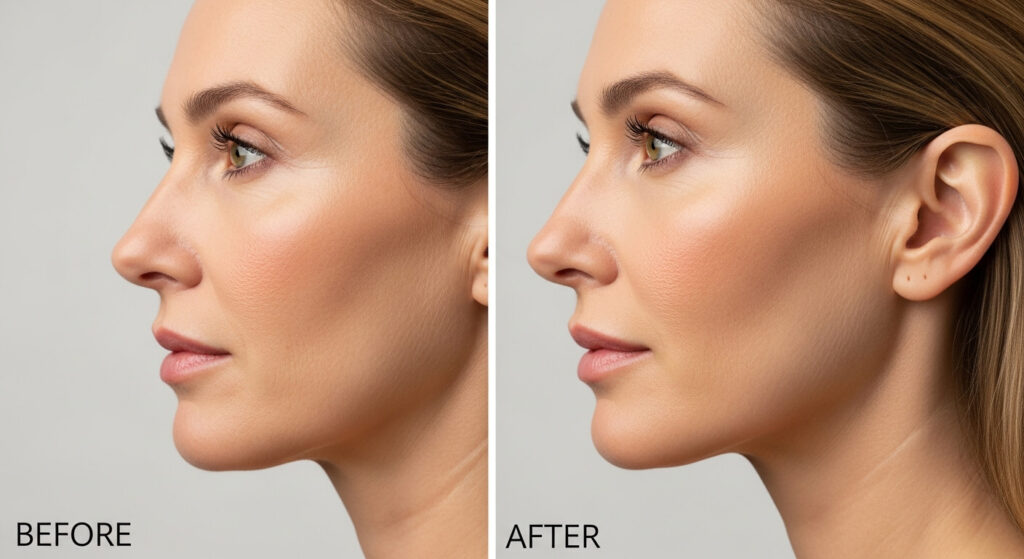
The result is not a volumizing effect. It’s a quality effect. Skin that is plumper, more hydrated, smoother in texture, more luminous in appearance. The kind of skin that looks like it’s been sleeping well and drinking enough water and living a very healthy life — because its internal environment has been restored to something resembling that state.
This distinction also explains why skinboosters are appropriate in areas where filler is not. The very superficial dermis of the under-eye skin, the delicate skin of the neck and décolletage, the lips when the goal is quality rather than size — these are areas where a bolus of structural filler would look wrong and feel uncomfortable, but where a dispersed skinbooster treatment produces genuinely beautiful results.
The Main Skinbooster Options: What They Are and How They Differ
The skinbooster category has grown significantly over the last decade, and the options available now vary meaningfully in their formulation, their mechanism, and the specific results they produce. Understanding the main players helps clarify which might be most appropriate for a given patient’s skin and goals.
Profhilo
Profhilo is in many ways the treatment that defined the modern skinbooster category when it launched in European markets and quickly became one of the most discussed injectable treatments in aesthetic medicine. Its formulation is distinctive: it contains one of the highest concentrations of pure hyaluronic acid of any injectable product available — 64mg per 2ml syringe — in a unique NAHYCO hybrid technology that combines high-molecular-weight and low-molecular-weight hyaluronic acid without traditional cross-linking.
This matters for two reasons. First, the absence of cross-linking means Profhilo disperses extremely freely through the tissue from a small number of injection points — typically five per side of the face, in what is known as the BAP (Bio Aesthetic Points) technique. From those ten injection points, the product spreads to hydrate a large area of tissue, making the treatment efficient and minimizing the number of injections required.
Second, the combination of molecular weights produces a dual action. The high-molecular-weight component provides surface-level hydration and plumping, filling the spaces in the extracellular matrix. The low-molecular-weight component penetrates deeper into the tissue and stimulates fibroblasts — the collagen and elastin-producing cells — to increase their activity. Profhilo is therefore both a hydration treatment and a biostimulator, which places it in a category between traditional skinboosters and products like Sculptra. The collagen and elastin stimulation it triggers is not as pronounced as with dedicated biostimulators, but it contributes to a genuine improvement in skin quality that goes beyond simple hydration.
The standard Profhilo protocol involves two sessions spaced four weeks apart, followed by reassessment. Many patients maintain results with single treatments every three to six months after the initial course. Results are visible within a few weeks of the first treatment and continue to develop as the biostimulation effect progresses.
Juvederm Hydrate
Juvederm Hydrate is a lightly cross-linked hyaluronic acid skinbooster from the Allergan Juvederm family — the same manufacturer responsible for Juvederm Voluma and Juvederm Ultra, among others. Unlike Profhilo’s point-and-spread approach, Juvederm Hydrate is typically administered through a series of small intradermal injections across the treatment area using a technique called micro-papule injection — creating a fine grid of tiny deposits that work together to hydrate and improve the skin uniformly.
Juvederm Hydrate also contains mannitol, an antioxidant that protects the hyaluronic acid from degradation by free radicals, extending the product’s longevity in the tissue. This formulation detail contributes to a duration of effect that is meaningful — results typically last six months or longer with appropriate maintenance.
The results of Juvederm Hydrate are particularly notable for skin smoothness and texture improvement. The lightly cross-linked formulation provides slightly more structural cohesion than completely uncross-linked products, which contributes to a visible improvement in the fine surface texture of the skin that patients with crepey or rough texture find particularly satisfying.
Restylane Skinboosters (Vital and Vital Light)
Restylane Vital and Vital Light from Galderma are among the original skinbooster products, with a long clinical track record and a substantial body of published evidence supporting their efficacy. Restylane Vital is designed for the face, neck, décolletage, and hands, while Vital Light has a softer formulation suited to more delicate areas including the periorbital zone and lips.
The NASHA (Non-Animal Stabilized Hyaluronic Acid) technology used in Restylane products produces a consistent, well-characterized hyaluronic acid formulation that integrates naturally with the tissue. The injection technique typically involves a series of small intradermal deposits across the treatment area, similar to Juvederm Hydrate.
Newer Generation Skinboosters: Teosyal Redensity and Belotero Revive
The skinbooster category continues to evolve, with several newer formulations addressing specific aspects of skin quality beyond simple hydration.
Teosyal Redensity I contains hyaluronic acid combined with a complex of amino acids, antioxidants, minerals, and vitamins — essentially a nutritive cocktail for the dermis that supports tissue metabolism and skin cell function in addition to providing hydration. The concept is sound: hyaluronic acid restores the hydration environment, while the additional components support the metabolic processes that produce healthy skin.
Belotero Revive uses a monophasic cohesive gel technology that integrates particularly smoothly with dermal tissue, producing a very natural feel and appearance well-suited to superficial treatment areas.
The variety of options available means that a provider with experience across multiple products is better positioned to match the right formulation to the right patient than one who uses a single protocol for everyone.
What Skinboosters Address — and Where They Fit in the Treatment Landscape
The clearest indication for skinbooster treatment is overall skin quality decline — the category of concern described at the opening of this article. But within that broad indication, several specific presentations respond particularly well.
Dehydrated, dull skin that doesn’t respond to topical hydration. This is the classic skinbooster indication. When the dermis has lost its internal hyaluronic acid content, the skin appears flat and dull regardless of surface moisture. Restoring that internal hydration network produces a luminosity that is immediately noticeable and that no topical product can replicate — because it’s coming from within the tissue rather than sitting on top of it.
Fine lines from dehydration rather than muscle movement. Not all fine lines are dynamic wrinkles caused by muscle contraction. Many of the fine lines that appear on the cheeks, across the nose, and around the mouth are the result of the skin’s loss of internal structure and hydration — the skin folds and creases because it lacks the turgor to stay smooth. These lines respond beautifully to skinbooster treatment and not at all to Botox, because Botox has no mechanism to address hydration-related changes.
Thin, crepey skin texture. The papery, fine-textured quality that develops particularly on the neck, décolletage, and around the eyes as skin loses collagen and hydration is one of the most effectively treated concerns with skinboosters. The combination of restored hydration and biostimulation improves both the texture and the structural quality of this skin in ways that are clearly visible.
Neck and décolletage. These are areas where dermal fillers are not appropriate — there’s no structural volume deficit to correct, and the risk of complications from bolus injection in this tissue is meaningful. But skinboosters, delivered superficially and diffusely, are well-suited to improving the skin quality of the neck and chest. Many patients who address their face aesthetically and neglect the neck find that the contrast becomes increasingly noticeable over time. Skinbooster treatment of the neck and décolletage is one of the most underutilized opportunities in comprehensive facial aesthetic planning.
Perioral skin quality. The skin around the mouth — not the lips themselves, but the skin immediately surrounding them — is an area where fine lines, texture changes, and loss of plumpness can be challenging to address without making the lips themselves look treated. Skinboosters applied to the perioral skin improve the quality of this area with a subtlety that structural approaches can’t match.
Lip hydration and quality. When the goal is not to add size to the lips but to improve their texture, hydration, and natural definition — to make them look healthy and well-conditioned rather than volumized — a very light skinbooster treatment within and around the lips produces exactly the result that filler cannot. This is particularly relevant for patients in their 40s and 50s who notice that their lips have become drier and less defined without wanting a visibly augmented result.
Prevention in younger patients. One of the most interesting aspects of the skinbooster conversation is the growing interest among patients in their mid to late 20s who want to begin maintaining their skin’s hyaluronic acid content before significant decline has occurred. The logic is sound: preventing the loss of a resource is more straightforward than restoring it after significant depletion has taken place. For this patient, a Profhilo or Juvederm Hydrate treatment once or twice a year represents a proactive investment in maintaining the quality their skin currently has.
What to Expect From Skinbooster Treatment
Consultation. A skinbooster consultation assesses your skin quality concerns, determines which product and technique are most appropriate, and places the treatment within the context of whatever else is happening in your aesthetic plan. Skinboosters pair well with many other treatments — they complement biostimulators like Sculptra by addressing the superficial skin quality layer while Sculptra works on the deeper structural framework; they work alongside Morpheus8 and CO2 laser as part of a comprehensive skin health approach.
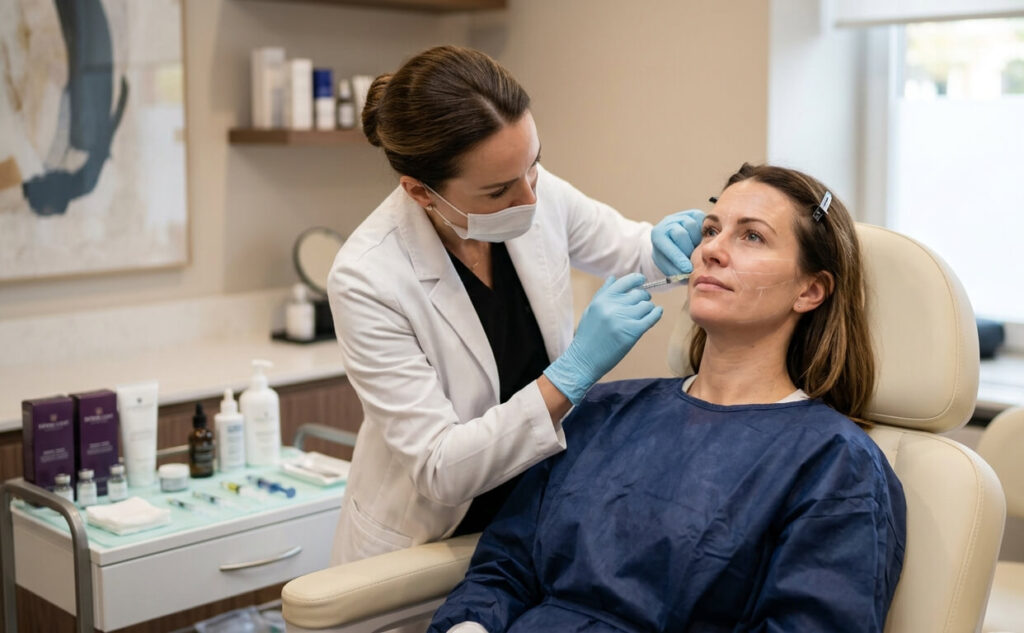
The procedure. Skinbooster treatment involves multiple small injections administered across the treatment area. Topical anesthetic is applied beforehand. Depending on the product and technique, the injection may be done by hand or using a device that administers multiple micro-deposits simultaneously. The procedure is generally well-tolerated and takes 20 to 40 minutes for a full-face treatment.
Immediately after. Multiple small bumps — papules — will be visible at the injection sites. These are completely normal and resolve within a few hours to 24 hours as the product begins to spread and integrate with the surrounding tissue. Some redness and mild swelling is expected. Most patients are comfortable returning to normal activities the following day.
Results. Initial improvement in skin hydration and luminosity is often perceptible within one to two weeks of the first treatment as the hyaluronic acid integrates with the tissue. The biostimulation component — the collagen and elastin stimulation from Profhilo in particular — develops over four to eight weeks. The full result of the initial treatment course is typically visible at around six to eight weeks after the second session.
How often? Most patients complete an initial course of two treatments for Profhilo or three for microinjection-based skinboosters, then maintain results with single treatments every three to six months. Individual protocols vary based on the patient’s skin, the product used, and their goals.
Skinboosters and the Layered Approach to Skin Health
One of the most important ways to think about skinbooster treatment is as one layer in a comprehensive approach to skin health — each layer addressing a different depth and a different aspect of what contributes to how skin looks and feels.
At the deepest level, biostimulators like Sculptra and Radiesse work on the structural collagen framework. In the mid-dermis, treatments like Morpheus8 and CO2 laser remodel collagen and improve texture. At the superficial dermis, skinboosters restore hydration and support the extracellular matrix. At the surface, BBL addresses pigmentation and vascular irregularity. And a thoughtful topical routine — retinoids, antioxidants, SPF — maintains and supports everything beneath it.
No single treatment addresses all of these layers. The patients who achieve the most satisfying, most comprehensive results are those who work with a provider who can see the full picture — who understands what each treatment does, what it doesn’t do, and how to sequence and combine treatments that work together across different depths to produce results that are genuinely greater than the sum of their parts.
This is fundamentally a different kind of aesthetic medicine than the single-modality approach — the clinic that does Botox and fillers and not much else, or the one that has invested in a single device and applies it to everything. It requires broader clinical knowledge, deeper familiarity with a wider range of treatments, and the genuine commitment to understanding what each patient’s skin needs rather than what fits the treatment menu.
The Role of Topical Skincare Alongside Skinboosters
Skinboosters are not a replacement for a good topical skincare routine — and a good topical routine doesn’t make skinboosters unnecessary. They operate at different depths and contribute to different aspects of skin quality.
What skinboosters do is restore the internal environment of the dermis — the hydration, the structural support, the biological signals for collagen production — in a way that topical products cannot reach. What a thoughtful topical routine does is maintain and protect the surface, support the processes the skin needs to remain healthy, and extend the results of in-clinic treatments.
The most common topical partners for skinbooster maintenance include:
SPF. Non-negotiable after any skin treatment and the single most evidence-supported anti-aging intervention available without a clinic appointment. UV exposure degrades hyaluronic acid in the skin and breaks down collagen — the same resources that skinboosters are restoring. Protecting them is the most direct way to extend the results of any treatment.
Retinoids. Vitamin A derivatives remain the most evidence-supported topical ingredient for promoting collagen synthesis, improving skin texture, and supporting cell turnover. Used consistently alongside skinbooster treatment, retinoids support the same biological processes at the surface level.
Antioxidants. Vitamin C, niacinamide, and similar antioxidant ingredients protect the skin from environmental damage that contributes to the degradation of hyaluronic acid and collagen. They complement skinbooster treatment by reducing the rate at which the restored resources are depleted.
Barrier support. Ceramides, fatty acids, and other barrier-supporting ingredients maintain the skin’s protective function, reduce transepidermal water loss, and support the overall hydration balance of the skin — all of which complement what skinboosters achieve at the dermal level.
Frequently Asked Questions
How quickly will I see results from skinboosters? Initial improvement in hydration and skin quality is often noticeable within one to two weeks of the first treatment. The full result — including any biostimulation component — typically develops over six to eight weeks after completing the initial treatment course.
Are skinboosters painful? With topical anesthetic applied beforehand, most patients find the treatment well-tolerated. The sensation varies by area — the neck and décolletage are typically more sensitive than the face. The papules that form at injection sites during treatment can look alarming if you’re not expecting them, but they resolve within hours.
How long do skinbooster results last? Most patients find that results from a completed initial course last four to six months before a maintenance treatment is beneficial. Individual variation exists — skin type, age, lifestyle factors, and UV exposure all influence how quickly the skin’s hyaluronic acid content depletes again.
Can skinboosters be combined with other treatments? Yes. Skinboosters are among the most versatile treatments for combination planning because they address a layer of skin health — the superficial dermis hydration and extracellular matrix — that most other treatments don’t specifically target. They work well alongside biostimulators, laser treatments, and injectable treatments at different points in a sequenced plan.
Are skinboosters the same as mesotherapy? They share a delivery technique — intradermal microinjection — but are not the same thing. Mesotherapy typically involves cocktails of vitamins, amino acids, and other ingredients administered into the skin. Skinboosters specifically use hyaluronic acid formulations designed for dermal integration and hydration restoration. The two can complement each other but serve different purposes.
Can skinboosters be used on the body? Yes. The neck and décolletage are the most common body areas treated with skinboosters, but they can also be used on the hands, inner arms, and other areas where skin quality improvement is the goal. The approach and product selection for body treatment differs slightly from facial treatment.
I’m in my late 20s — is it too early for skinboosters? No. The skin’s hyaluronic acid content begins declining in the mid to late 20s. Beginning skinbooster treatment at this stage — once or twice a year — maintains resources that are easier to preserve than to restore after significant depletion. Many providers consider early skinbooster treatment one of the most rational proactive investments in long-term skin health.