Something changed in the conversation around weight management over the last few years — and it wasn’t subtle. The arrival of GLP-1 receptor agonists as mainstream medical treatments, and specifically the emergence of tirzepatide (marketed as Mounjaro) and semaglutide (Ozempic, Wegovy) as effective tools for sustained weight reduction, shifted the clinical landscape in ways that are still working their way through both medicine and aesthetics.
These medications work. That’s the part the conversation keeps circling back to, because it represents a departure from what patients and providers had come to expect from medical weight management. People taking tirzepatide in clinical trials lost amounts of weight — 15, 20, even 25 percent of body weight in some participants — that had previously required bariatric surgery to achieve. For the first time, a pharmacological intervention was producing results that meaningfully competed with the surgical standard.
But weight loss at this scale is not a cosmetically neutral event. Rapid significant weight reduction changes the body in ways that create their own aesthetic considerations. And aesthetic medicine, which has always intersected with how people feel about their appearance, is now part of the clinical picture for many patients navigating this territory.
What Mounjaro Is and How It Works
Tirzepatide — brand name Mounjaro — is a dual GIP/GLP-1 receptor agonist. Understanding what that means explains why it produces stronger weight loss than the earlier GLP-1 medications.
GLP-1 (glucagon-like peptide-1) is a hormone released in the gut in response to food. It stimulates insulin secretion, inhibits glucagon (which would otherwise raise blood sugar), slows gastric emptying, and signals satiety to the brain — the feeling of fullness that tells you to stop eating. GLP-1 receptor agonists like semaglutide mimic these effects pharmacologically.
GIP (glucose-dependent insulinotropic polypeptide) is a related hormone that also plays a role in insulin response and fat metabolism. Tirzepatide activates both GIP and GLP-1 receptors simultaneously, producing a more potent metabolic effect than GLP-1 agonism alone. In clinical trials, tirzepatide consistently produced greater weight reduction than semaglutide at comparable doses.
The practical effect for patients is a significant reduction in appetite and food intake — not through willpower or restriction, but through a physiological shift in how hunger and satiety signals operate. Many patients describe the experience as a quieting of the constant background noise of food preoccupation that they had previously managed through effort. Eating less becomes relatively easy because the signals driving overeating are reduced at their source.
The medication is administered by weekly subcutaneous injection. Treatment is typically long-term — the weight loss maintained while on the medication tends to return if it’s discontinued, which has significant implications for how it’s used clinically and how patients should think about it.
The Aesthetic Dimension of Significant Weight Loss
The benefits of significant weight reduction on metabolic health, cardiovascular risk, joint health, and quality of life are well-documented. But the aesthetic consequences of rapid, substantial weight loss are less commonly discussed outside clinical settings, and they matter for patients who are invested in how they look as well as how they feel.
Skin laxity. Skin adapts to the body it contains over time. Significant, rapid weight loss — particularly when it happens quickly and at older ages when skin elasticity is reduced — leaves skin with insufficient time and capacity to contract back to the smaller body beneath it. The result is excess skin that sags, most visibly in the face, neck, abdomen, arms, and inner thighs. The degree of laxity depends on the amount of weight lost, the speed of loss, the patient’s age, genetics, and baseline skin quality.
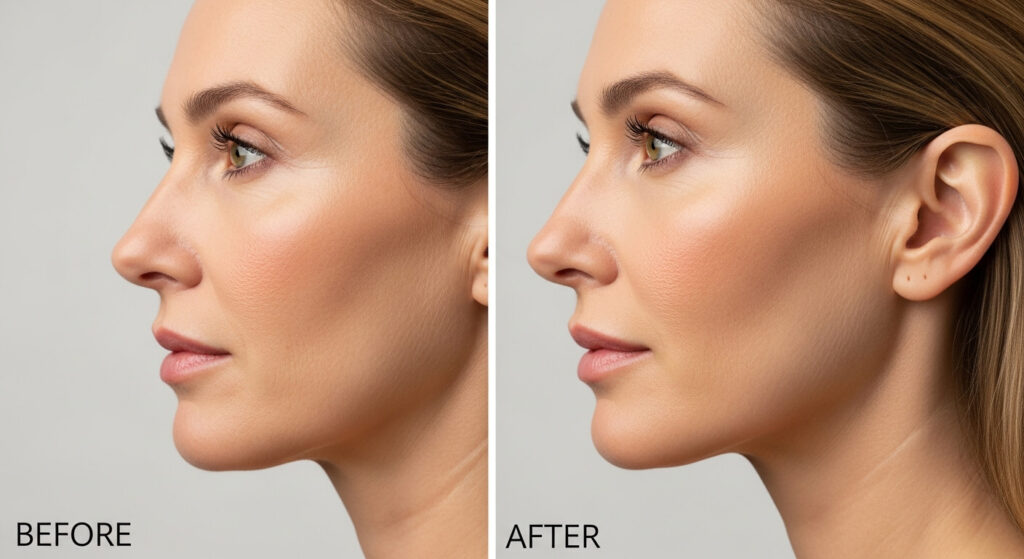
In the face, this often manifests as a phenomenon patients have started calling “Ozempic face” — accelerated facial aging caused by the loss of facial fat that was providing structure and fullness. The cheeks hollow, the lower face loses its foundation, the skin appears to hang rather than sit. This is not a rare or extreme outcome — it’s a common consequence of losing significant facial volume rapidly, and it affects a meaningful proportion of patients who lose more than 10 to 15 percent of their body weight quickly.
Volume changes throughout the face. Fat loss from GLP-1 treatment is not selective — it occurs throughout the body, including the face. Facial fat compartments that provide structural support, define contours, and contribute to the rested, healthy appearance of youth can reduce significantly. The result is a face that may look older, more gaunt, or more structurally compromised than it did before weight loss, even as the body as a whole has improved substantially.
Body contour changes. Significant weight loss changes body shape in ways that may be generally positive but that frequently include areas of stubborn remaining fat that don’t respond proportionally to the overall loss. These areas — common locations include the flanks, lower abdomen, inner thighs, and arms — can be more visible after overall weight reduction because surrounding areas have slimmed down while these deposits remain. Body contouring treatments become relevant in this context.
Psychological considerations. The relationship between physical appearance and psychological wellbeing is complex for anyone, and it’s particularly complex for people who have undergone significant body change. Patients who have worked hard to achieve weight loss — whether through GLP-1 medications, lifestyle change, or surgery — often have strong feelings about how their body looks afterward, and the changes to the face and skin that accompany major weight reduction can significantly affect how they feel about the overall result.
Where Aesthetic Medicine Fits
Aesthetic medicine has always had a relationship with weight and body composition — the two are not separate territories. GLP-1 medications have made this relationship more explicit by producing the kind of body change that creates aesthetic considerations at a scale and pace that was previously uncommon outside surgical weight loss.
Facial volume restoration. The primary aesthetic concern for most patients experiencing facial changes from significant weight loss is restoring the structural volume that was lost. The treatment approach depends on the degree of change and the patient’s preferences.
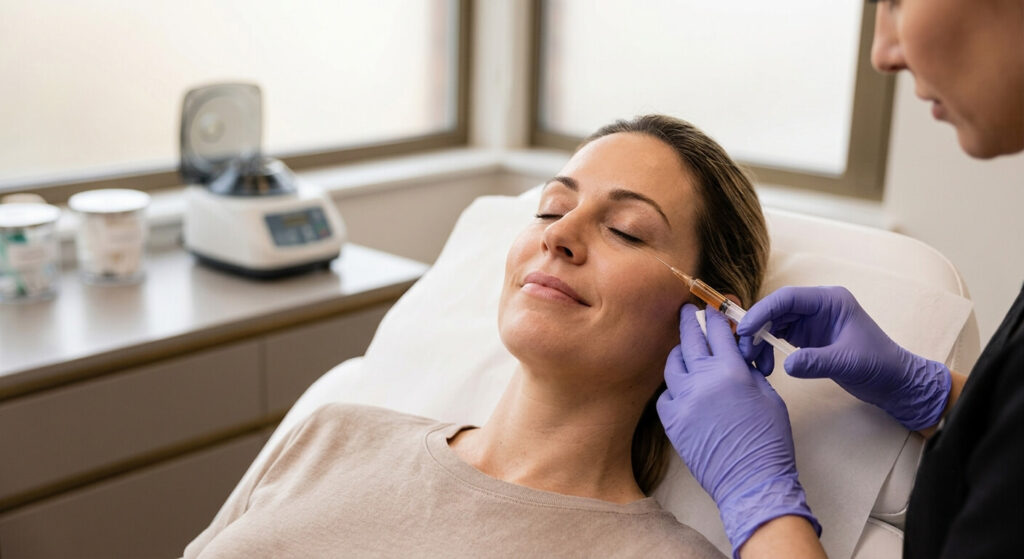
Biostimulators — Sculptra in particular — are a strong option for patients who want to restore facial volume using a regenerative approach. Because significant weight loss may have also reduced collagen and skin quality throughout the face, a treatment that stimulates new collagen and elastin as it restores volume addresses multiple aspects of the problem simultaneously. The progressive nature of Sculptra’s effect also allows restoration to develop gradually and naturally rather than appearing all at once.
Hyaluronic acid fillers provide more immediate correction and are appropriate for specific structural deficits — the cheeks, temples, and jawline — where targeted volumization can restore definition. Used conservatively and in appropriate locations, they can make a meaningful difference to the facial appearance of patients whose GLP-1 weight loss has affected their facial structure.
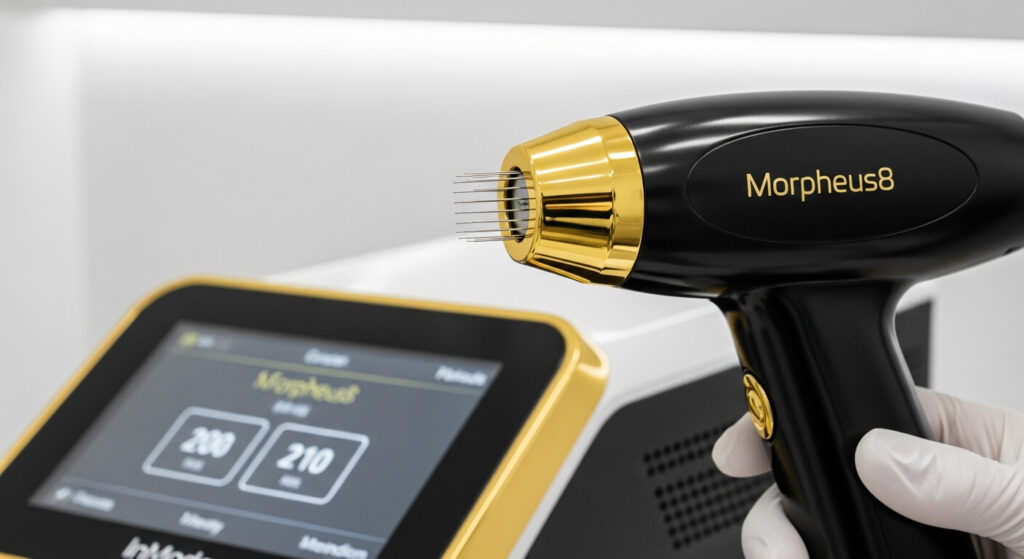
Skin tightening. For patients who have lost significant weight and have skin laxity in the face, neck, or jowl area, treatments that tighten and restructure the tissue are relevant. Morpheus8 and Endolift address different depths of the problem — Morpheus8 for dermal remodeling and mild tightening, Endolift for deeper structural work in the subcutaneous tissue. Thread lifting can reposition tissue that has descended. The appropriate combination depends on the degree of laxity and the patient’s goals.
Body contouring. For areas of residual stubborn fat that remain disproportionate after GLP-1 weight loss, non-surgical body contouring options are available. Cryolipolysis (fat freezing) targets specific areas of localized fat through controlled cooling that causes fat cell death and gradual reduction of the treated deposit. It’s appropriate for discrete, pinchable fat deposits rather than large areas of diffuse excess fat or skin laxity, and understanding this distinction avoids treatment of inappropriate candidates.
Skin quality improvement. Rapid weight loss can accelerate the appearance of aging throughout the skin by reducing the dermal fat that contributes to skin thickness and the facial fat that provides structural support. Treatments that improve overall skin quality — CO2 laser for resurfacing and collagen remodeling, Morpheus8 for deeper structural improvement, skinboosters for dermal hydration, PRP for regenerative support — are all relevant in this context and are often combined as part of a comprehensive plan for patients navigating the aesthetic consequences of significant weight loss.
The Clinical Framework at an Aesthetic Clinic
When a patient presents for aesthetic consultation having recently undergone or currently undergoing significant weight loss with a GLP-1 medication, the clinical approach is somewhat different from a standard aesthetic consultation. The body and face are actively changing. Treatment decisions made before weight loss has stabilized may need to be repeated or adjusted as the picture changes further.
Generally, the approach involves:
Waiting for stability where possible. For treatments that address specific deficits — volume restoration, structural lifting — waiting until weight has stabilized produces more accurate and lasting results. Treating a face that is still losing volume from ongoing medication use is treating a moving target.
Prioritizing skin quality during active loss. Treatments that support skin health during the period of weight loss — skinboosters, PRP, and collagen-stimulating treatments — can help the skin adapt more effectively and reduce the degree of laxity that develops by the time weight stabilizes.
A phased approach to the full picture. After stabilization, a realistic assessment of what has changed and what the patient’s priorities are guides a phased treatment plan addressing the most impactful concerns first — typically facial volume and structural support, followed by body contouring and further skin quality work.
Ongoing conversation about the medication itself. Weight management with GLP-1 medications is a medical matter that sits at the intersection of endocrinology, metabolic medicine, and lifestyle. The role of an aesthetic clinic in this conversation is to address the appearance-related consequences of weight change, provide honest guidance about what aesthetic treatments can realistically offer, and coordinate with whatever medical oversight the patient has for the medication itself.
Mounjaro at Ervin Beauty: What This Means in Practice
Ervin Beauty includes weight management within its treatment portfolio, and the inclusion reflects an understanding that weight and aesthetics are connected aspects of the same overall picture for many patients. The clinic is positioned to address both the medical side of GLP-1 treatment — in appropriate clinical contexts — and the aesthetic consequences of the body changes that follow.
What this means in practice is that patients navigating significant weight change have access to providers who understand both sides of the picture. The conversation about how Mounjaro fits into a patient’s overall health and aesthetic goals, what changes to expect in the face and body, and what treatments can address those changes is one that can happen within the same clinical relationship rather than across disconnected providers who don’t communicate.
Frequently Asked Questions
No. Mounjaro’s active ingredient is tirzepatide, a dual GIP/GLP-1 receptor agonist. Ozempic (and Wegovy) contain semaglutide, a GLP-1 receptor agonist only. Both produce weight loss and improve metabolic markers, but tirzepatide typically produces greater weight reduction in clinical comparisons.
The term refers to the facial aging and hollowing that can follow significant rapid weight loss during GLP-1 treatment. It’s caused primarily by loss of facial fat that provides structural support. It can be addressed with volume restoration treatments — biostimulators, strategic use of HA fillers — and skin quality treatments that improve texture and collagen content.
The timing depends on the treatment. Skin quality treatments — skinboosters, PRP, light resurfacing — are appropriate during active weight loss and can support skin adaptation. Volume restoration and structural treatments are generally better timed after weight has stabilized so that the treatment target is stable.
The rate of weight loss varies by dose and individual response. Most patients reach a plateau — where the medication’s effect and caloric intake are in equilibrium — over 12 to 18 months, though this varies. Discussing timing with the prescribing provider gives the most accurate picture for any individual patient.
Non-surgical treatments can improve mild to moderate skin laxity — tightening, stimulating collagen, improving skin quality — but they have limits. Severe skin laxity with significant excess skin, particularly in the body, may ultimately require surgical correction. Being honest about what non-surgical options realistically offer is part of the consultation process.
If the medication is discontinued and weight returns, the facial volume that was lost may partially recover as weight is regained. This is one of the factors that makes the timing of facial aesthetic treatments relevant — treating before weight loss is stable or before a decision about continuing the medication is made can lead to treatments that need to be repeated or revised.