Thread lifting has been around in various forms since the 1990s, but the treatment available today bears little resemblance to the early procedures that gave the category a mixed reputation. Modern PDO thread lifting uses entirely different materials, different techniques, and a much more nuanced understanding of what threads can and cannot do in facial tissue. For the right patient, treated by a provider who understands the current clinical picture, it occupies a specific and useful space in non-surgical facial rejuvenation that other treatments don’t fill in quite the same way.
Understanding what PDO threads actually are, how they work in the tissue, and where they sit in the broader landscape of lifting options takes some unpacking — because the marketing around thread lifting often oversimplifies both what the treatment achieves and what it doesn’t.
What PDO Threads Are
PDO stands for polydioxanone — a synthetic polymer that has been used in surgical sutures for decades. It’s biocompatible, fully absorbable, and has a well-characterized safety profile from its long history in surgical settings. When used in aesthetic thread lifting, PDO is manufactured into fine threads of varying thicknesses and configurations, each designed for a different purpose in the tissue.
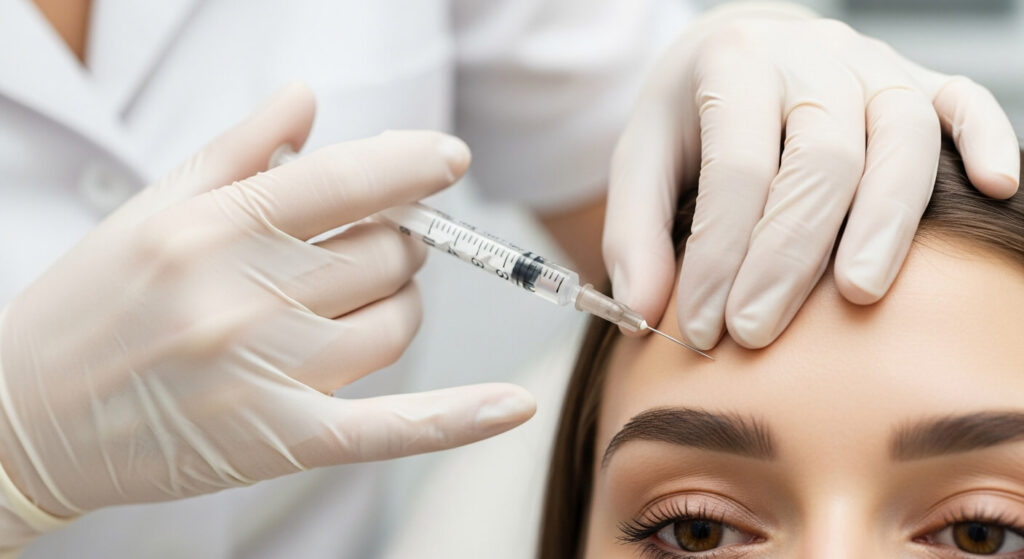
The threads are introduced into the subcutaneous tissue using a fine needle or cannula. Once in place, they do two things. First, they create an immediate mechanical effect — lifting or tightening the tissue through the physical presence of the thread and the way it’s anchored or positioned in the skin. Second, as the body responds to the presence of a foreign material, it initiates a wound-healing process around the thread that stimulates collagen production. Over the weeks and months that the thread is absorbing, new collagen forms along its path. By the time the PDO has fully degraded — typically over six to twelve months depending on the thread type and thickness — a network of new collagen remains in its place.
This collagen-stimulating mechanism is what separates modern PDO thread lifting from the older thread procedures that used non-absorbable sutures. Those early threads stayed in the tissue permanently, and the complications associated with them — migration, palpability, infection years later — were a direct consequence of that permanence. PDO absorbs cleanly, and the tissue it leaves behind is the patient’s own.
The Different Types of PDO Threads
The PDO thread category is not a single product. It encompasses several distinct thread types that work differently and are used for different purposes, and understanding the distinctions matters because providers who use the right thread for the right indication produce very different results from those who apply a one-thread approach to everything.
Mono threads are smooth, single-strand threads with no barbs or cogs. They don’t lift tissue — they’re placed in a grid or fan pattern to stimulate collagen production across an area. The effect is a gradual improvement in skin quality, texture, and mild tightening as the collagen response develops. Mono threads are used in areas where the goal is skin quality improvement and very mild tightening rather than visible mechanical lifting: the cheeks, neck, décolletage, and periorbital area. They’re often placed in significant numbers during a single session, creating a scaffold of collagen-stimulating threads across the treatment zone.
Cog threads are the lifting threads. They have barbs or cogs along their length that anchor into the surrounding tissue, allowing the thread to grab and hold the tissue when tension is applied. A cog thread placed through an entry point and pulled creates a mechanical lift of the tissue along its path — the barbs catch the fibrous tissue and hold it in the new position. This is what produces the immediately visible lifting effect that most patients associate with thread lifting. Cog threads are used in areas where actual repositioning of tissue is the goal: the jowls, the cheeks, the brow, the neck.
Screw and tornado threads are twisted or wound configurations that create more surface area and a stronger collagen-stimulating response than mono threads. They’re used in areas where volume and fullness improvement is the primary goal alongside collagen stimulation — the lips, cheeks, and under-eye hollowing, among others.
The treatment a patient receives is typically a combination of thread types addressing different aspects of the same overall goal: mechanical lifting where tissue needs repositioning, and collagen stimulation across the surrounding areas to support and extend the result.
What Thread Lifting Addresses
The concerns that respond to PDO thread treatment follow directly from the mechanisms described above.
Jowling and lower face descent. The descent of tissue along the lower face — the softening of the jawline, the appearance of jowls, the blurring of the distinction between face and neck — is one of the primary indications for cog thread treatment. Threads placed from entry points near the hairline or ear can reposition descended tissue and restore a cleaner jawline contour. The result is not a surgical-level lift, but for patients with mild to moderate jowling, the improvement can be clearly visible and meaningful.
Brow position. The lateral brow in particular tends to descend with age, contributing to a tired or heavy appearance around the eyes. Threads placed in the brow area can reposition the tail of the brow and open the eye area. This is a delicate treatment that requires precise anatomical knowledge — the structures around the eye leave little margin for imprecision.
Midface and cheek support. Volume loss and tissue descent in the midface produces the flattening of the cheeks and the deepening of nasolabial folds. Cog threads in the midface reposition the descended tissue, while mono or screw threads in the same area stimulate collagen to support and maintain the result.
Neck laxity and platysmal bands. The neck is an area where thread lifting can be particularly effective because the tissue responds well to the combination of mechanical repositioning and collagen stimulation. Threads placed along the neck can improve both skin laxity and the appearance of the vertical bands that develop as the platysma muscle becomes more visible with age.
Skin quality across multiple zones. Mono thread treatment of the cheeks, temples, neck, and décolletage produces a gradual improvement in skin texture, mild tightening, and overall skin quality as the collagen response develops. Patients often notice this improvement in the weeks following treatment as an improvement in how their skin feels and photographs before the collagen changes become structurally visible.
How Thread Lifting Compares to the Alternatives
Every non-surgical lifting option addresses the problem from a slightly different angle. Understanding where thread lifting sits in relation to other treatments helps clarify when it’s the right choice and when a different approach makes more sense.
Threads vs. Endolift. Endolift delivers laser energy from inside the tissue via a microoptic fiber, targeting the subdermal fat and fibrous tissue directly. It’s more invasive than thread lifting — the fiber is inserted through entry points under local anesthesia — but it works at a deeper tissue level and produces tightening through a different mechanism. Thread lifting mechanically repositions tissue and stimulates collagen. Endolift thermally contracts and remodels the deeper fibrous structure. For patients with significant subdermal laxity, Endolift often reaches what threads cannot. For patients whose concern is primarily tissue descent rather than deep structural laxity, threads may be the more appropriate first treatment. These are frequently used together, addressing complementary aspects of the same overall concern.
Threads vs. HIFU/Ultherapy. High-intensity focused ultrasound targets the SMAS layer — the fibromuscular layer below the subcutaneous fat — using focused acoustic energy. The lifting effect it produces comes from contraction and collagen remodeling at this deep level. Thread lifting works in the shallower subcutaneous tissue. HIFU and thread lifting therefore address different anatomical depths, and combining them covers more of the structural territory involved in facial aging. HIFU alone, without the mechanical repositioning that threads provide, sometimes produces collagen changes that aren’t sufficient to address tissue that has already significantly descended.
Threads vs. Morpheus8. Morpheus8 is an RF microneedling device that stimulates collagen in the dermis and shallow subdermal tissue. It’s an excellent treatment for skin quality, texture, and mild tightening, but it doesn’t mechanically reposition tissue the way cog threads do. For patients dealing with actual tissue descent, Morpheus8 and thread lifting address different levels of the same problem and work well together.
Threads vs. Surgical facelift. The surgical facelift remains the most effective intervention for significant facial aging because it directly repositions the SMAS layer and removes excess skin — things that no non-surgical treatment can replicate. Thread lifting is not a replacement for a facelift in patients who are genuine surgical candidates. It occupies the space before surgery becomes the appropriate option, or serves patients who have chosen not to pursue surgery for personal reasons. Honest providers are clear about this distinction.
The Procedure: What to Expect
Consultation. Assessment for thread lifting covers the distribution of tissue laxity, skin quality and thickness, facial anatomy, and what realistic improvement looks like for the patient’s specific situation. It also involves a clear conversation about what threads can achieve vs. what they can’t — a patient with significant facial descent expecting a surgical-level result will be better served by an honest conversation before treatment than by disappointment after it.
Before the procedure. Certain medications and supplements that affect bleeding — aspirin, ibuprofen, fish oil, vitamin E — are typically paused in the days before treatment. Dental procedures should be avoided in the two weeks surrounding thread lifting, as any infection introduced orally can theoretically travel to the thread placement sites.
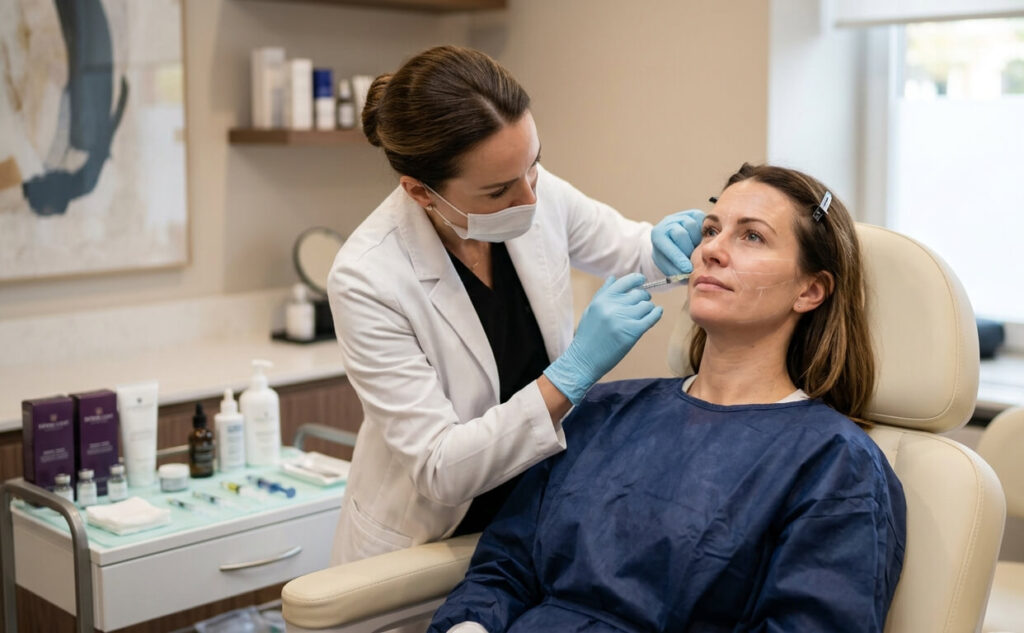
The procedure itself. Entry points are marked and local anesthesia is administered. The threads are introduced through these entry points using a needle or cannula, placed in the appropriate position in the tissue, and — in the case of cog threads — tensioned to achieve the intended lift before being trimmed flush with the entry point. The entry points are tiny, typically less than a millimeter, and heal without visible scarring in the vast majority of patients. A full-face thread treatment takes 45 to 90 minutes depending on how many threads are placed and which areas are treated.
Recovery. Swelling, mild bruising, and a feeling of tightness in the treated areas are normal for the first several days. Some patients notice slight puckering or dimpling of the skin in the days immediately following treatment — this is caused by the threads gathering the tissue and typically resolves within one to two weeks as the tissue settles. Sleeping on the back and avoiding significant facial movement — including chewing hard foods and wide mouth opening — is recommended for the first week or two. Physical exertion and facial massage should be avoided for two to three weeks.
Results timeline. The immediate effect of cog thread lifting is visible once the swelling resolves, typically within one to two weeks. The progressive collagen-building effect develops over the following months, supporting and in some cases extending the initial mechanical result. Most patients see their best results at three to six months after treatment, with the collagen changes continuing to develop as the PDO absorbs.
Duration. Thread lifting results vary by patient, technique, and the number of threads placed. Most patients maintain meaningful results for one to two years, after which a repeat treatment can maintain the outcome. Because each treatment stimulates new collagen, patients who repeat thread lifting over time often accumulate a progressive improvement in skin quality alongside the structural effects.
What Determines the Quality of Thread Lifting Results
This is where the clinical reality of thread lifting diverges significantly from the marketing around it. The outcome of a thread lifting treatment is determined more by who places the threads than by the threads themselves. The PDO material is a commodity. What varies between providers is anatomical knowledge, technique, and clinical judgment.
Cog threads placed too superficially are palpable under the skin. Threads placed in the wrong vector create unnatural-looking distortion rather than a lift. Insufficient thread count for the area being treated produces results that don’t hold. And a provider who doesn’t have a realistic picture of what threads can achieve for a specific patient’s degree of laxity will produce disappointed patients regardless of their technical skill.
The providers who produce the best thread lifting results are those who see the treatment as one component in a comprehensive approach to facial aging — who know when to use threads, what to combine them with, and when to tell a patient that a different treatment would serve them better.
Frequently Asked Questions
PDO has a decades-long track record in surgical applications. The main risks associated with thread lifting — infection, asymmetry, palpability, and in rare cases thread breakage or migration — are largely technique-dependent and can be minimized by working with an experienced provider. Serious complications are uncommon.
Cog threads can often be removed shortly after placement if a result is clearly wrong, though this becomes more difficult as the tissue heals around the thread. After several weeks, removal is challenging. This is part of why assessment and expectation-setting before treatment matters: adjusting a thread result after the fact is harder than getting the placement right initially.
This varies considerably based on the area being treated and the degree of change desired. A conservative brow lift might involve four to eight threads per side. A full lower face and neck treatment might involve thirty or more threads in total. A thorough consultation will include a clear discussion of what’s recommended for your situation.
Yes, and combination treatment is common. Threads are frequently used alongside Morpheus8, Endolift, biostimulators like Sculptra, and injectables as part of a comprehensive plan. The sequencing matters — some treatments are better performed before or after threads rather than simultaneously.
As PDO absorbs over six to twelve months, the mechanical component of the lift gradually diminishes. What remains is the collagen that formed in response to the thread’s presence. The degree to which results persist after absorption depends on how much collagen was stimulated and the individual patient’s skin quality and age.