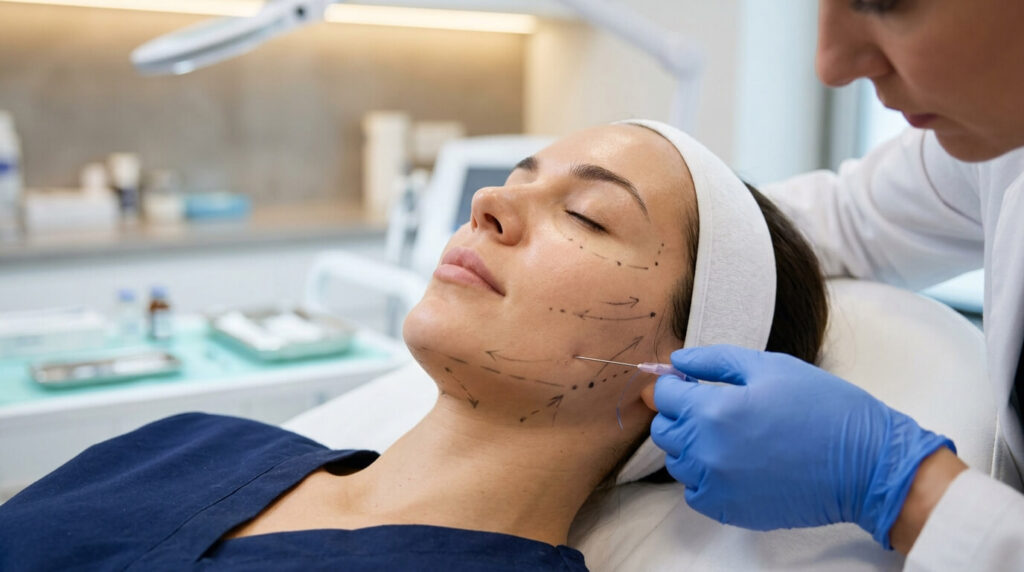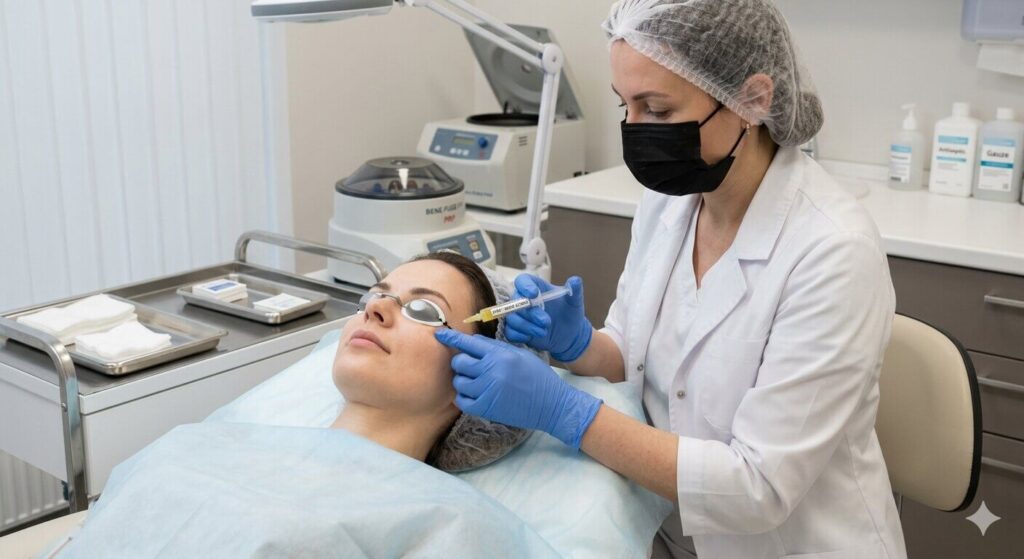
Hair thinning is one of those concerns that tends to sit quietly for years before someone decides to actually do something about it. By the time most patients bring it up in a consultation, they’ve usually already tried a topical product or two, done some research on medication options, and arrived at a simple question: is there something that works with the body’s own biology rather than introducing a drug or committing to surgery. PRP and PRF are two of the more established answers to that question, and understanding how they actually work on the scalp makes it much easier to set realistic expectations before starting.
What PRP Actually Is
Platelet-rich plasma is created by drawing a small amount of the patient’s own blood and spinning it in a centrifuge to separate and concentrate the platelets – the blood component responsible for triggering the body’s healing and regenerative processes. Platelets carry growth factors and signaling proteins that, once concentrated and reintroduced into tissue, support cell repair, encourage new blood vessel formation, and help regulate inflammation.
When injected into the scalp, this concentrated plasma delivers those growth factors directly to the hair follicles and surrounding tissue, supporting the biological environment that follicles need to remain in an active growth phase rather than shifting into dormancy. Because the solution comes entirely from the patient’s own blood, there’s no risk of allergic reaction or rejection – the treatment is working with the body’s existing biology rather than introducing anything foreign to it.
PRP vs. PRF for Hair Restoration
PRF, or platelet-rich fibrin, is prepared slightly differently – spun at a lower speed for a longer duration and without anticoagulants, which preserves a fibrin matrix that holds the concentrated growth factors in place and releases them gradually over time rather than all at once. For scalp treatment, this slower, sustained release can extend the biological activity of a single session, since the fibrin scaffold continues delivering growth factors to the follicles over days rather than in one immediate burst.
Neither option is universally superior. PRP’s faster release suits protocols built around more frequent sessions, while PRF’s extended activity window makes it a reasonable choice for patients spacing treatments slightly further apart, or as a complement layered into a broader PRP-based series. At Ervin Beauty, the choice between the two – or a combination of both – is part of the initial consultation, based on the specific pattern and stage of thinning being addressed.
How the Treatment Actually Works on the Scalp
Hair grows in cycles, moving through an active growth phase (anagen), a transitional phase (catagen), and a resting phase (telogen) before the strand sheds and a new cycle begins. In androgenetic alopecia and other common thinning patterns, an increasing proportion of follicles spend more time in the resting phase and produce progressively finer, shorter hairs with each cycle – a process called miniaturization.
The growth factors delivered through PRP and PRF appear to support the transition of follicles back into the active growth phase and improve the microvascular environment around the follicle, which affects how well nourished and metabolically active it is during that growth phase. This is a gradual biological process rather than an immediate one, which is the main reason results build slowly across a series of sessions rather than appearing after a single treatment.
Research on PRP for hair loss has grown substantially over the past decade, with a number of studies specifically evaluating androgenetic alopecia and alopecia areata – the two most common categories of hair thinning encountered in a med spa setting. The evidence is generally supportive of PRP as an effective, low-risk option for suitable candidates, though as with most regenerative treatments, individual response varies based on the underlying cause and stage of hair loss.
Who Tends to Be a Good Candidate
Good candidates are generally dealing with androgenetic alopecia (pattern thinning) or early-stage alopecia areata, without active scalp infections or lesions in the areas being treated. Patients with conditions that significantly lower blood platelet counts – which can occur as a side effect of certain cancer treatments – typically aren’t good candidates, since the treatment depends on having enough platelets in the blood sample to produce a meaningfully concentrated solution.
Timing matters as well. Patients with more advanced, longstanding hair loss – areas where follicles have been dormant for an extended period or have already been lost entirely – tend to see a more modest response than patients who address thinning while follicles are still present and simply underperforming. This is one of the more common conversations in an initial consultation: setting expectations based on how much viable follicle activity remains in the treatment area, rather than assuming the treatment will regrow hair in areas that have been fully bald for years.
What a Treatment Session Actually Involves
The appointment starts with a standard blood draw – typically a small number of vials, comparable to routine bloodwork – followed by centrifuge processing to separate and concentrate the platelets, which takes roughly ten to fifteen minutes. While the blood is processing, the scalp is cleansed and, if needed, a topical numbing agent is applied to the treatment area to minimize discomfort during injection.
The PRP or PRF solution is then injected in a grid-like pattern across the affected areas of the scalp, using a fine needle at a shallow depth targeting the follicle-rich layer of tissue. Most sessions take under an hour from start to finish, including the processing time, and patients typically return to normal activities immediately afterward. Mild tenderness, redness, or minor swelling at injection sites is common in the first day or two and generally resolves on its own.
What to Expect Over Time
Individual sessions are typically spaced about a month apart, with an initial series of three to four treatments recommended before assessing results. This spacing isn’t arbitrary – it reflects the pace of the hair growth cycle itself. A single treatment doesn’t have time to meaningfully shift follicles that are already partway through a resting phase; a series gives sequential treatments the chance to catch follicles at different points in their individual cycles.
Visible improvement in hair density and thickness generally begins to show up around the three-to-six-month mark, once new hair produced during the treated growth cycles has had time to actually grow out to a noticeable length. This timeline can feel slow to patients expecting a faster result, but it’s a direct consequence of how hair growth biology works – there’s no way to meaningfully shortcut the time it takes a follicle to produce visible new hair, regardless of how effective the underlying treatment is.
After the initial series, many patients move to a maintenance schedule – often a session every three to six months – to sustain the improvement, since the underlying tendency toward follicle miniaturization in androgenetic alopecia doesn’t fully resolve on its own and benefits from ongoing support over time.
Summary
PRP and PRF support hair growth by delivering concentrated growth factors directly to scalp follicles, encouraging a shift back toward active growth phases and supporting the vascular environment around the follicle. PRF’s slower, sustained release complements PRP’s faster action, and the right choice – or combination – depends on the specific pattern being treated. Results build gradually across an initial series of monthly sessions, typically becoming visible around three to six months, with maintenance treatments supporting the improvement over the long term.
FAQ
An initial series of three to four sessions, spaced about a month apart, is typical before assessing results. Visible improvement in density and thickness generally appears around three to six months as new hair grows out.
Most patients describe mild discomfort, similar to a series of small pinches. Topical numbing is available to reduce sensitivity during the injections.
It’s most effective for androgenetic alopecia and early-stage alopecia areata, where follicles are present but underperforming. Areas with long-term, complete follicle loss typically respond less predictably.
PRP releases growth factors more quickly, while PRF’s fibrin matrix releases them more gradually over a longer period. The right choice depends on the specific thinning pattern and treatment schedule being planned.
Very little. Mild redness, tenderness, or swelling at injection sites is common for a day or two, but most patients return to normal activities immediately.