A first appointment for injectables or a skin treatment tends to feel more uncertain than it actually is. People wonder how long it will take, whether it will hurt, whether they will leave looking different, and what they are expected to know beforehand. Most of the uncertainty clears up once the sequence of a visit is laid out, because the structure is predictable: preparation, a conversation, the treatment, and a short recovery period.
This guide walks through that sequence from start to finish, using what Ervin Beauty in Studio City publishes about its own process and general medical guidance on preparing for cosmetic injectables. Details vary between clinics and between treatments, so your provider’s instructions always come first. The goal here is to help you arrive prepared, ask useful questions and know what is normal afterward.
Before you book: what to check
A med spa visit involves medical procedures, and the FDA treats dermal fillers that way. Its guidance says injections should be performed by a licensed health care provider, preferably one with experience in dermatology or plastic surgery, and that patients should ask about the provider’s training and experience with the specific procedure. It also advises asking to see the product, since FDA-approved fillers come in properly labeled, sealed vials or pre-filled syringes.
A few things are worth confirming before you book anywhere.
Who supervises the clinic. Ervin Beauty’s supervising Medical Director is Dr. Sonia Badreshia-Bansal, a board-certified dermatologist and dermatologic surgeon, as listed on the clinic’s studio page. Knowing who holds that role, and what their background is, tells you how the clinic approaches safety.
Who will treat you. Ask who performs the injections and how much experience they have with the treatment you want. A good clinic answers this directly.
What products are used. Hyaluronic acid fillers, neuromodulators such as Botox and other medical products come from licensed manufacturers. Ask which product is planned and why it suits your goal.
What the clinic says about results. Reputable providers state that results vary and that outcomes cannot be guaranteed. Ervin Beauty’s treatment pages say your provider will discuss suitability, options, risks and expected recovery before treatment, and that results may not occur for all patients. That is the language to look for.
Choosing what to book
Many first-time patients arrive unsure about the treatment itself. That is fine, because the clinic is set up for it. Ervin Beauty’s website suggests starting with a conversation about your goals and the options that may suit you, and the full treatment menu is organized by category, including Botox and other neuromodulators, dermal fillers, laser and energy treatments, Endolift, skin and regenerative treatments, and body treatments.
If you know what you want, book that treatment. If you only know what bothers you, such as lines on the forehead, a flat lip, hollow cheeks or tired-looking skin, say so when you book or at the start of the appointment. You do not need a treatment name to begin.
How long appointments take
Appointment length depends on the treatment, and Ervin Beauty lists the expected duration on each treatment page. A few examples from the current menu:
| Treatment | Listed appointment time |
| Botox per unit | 30 minutes |
| Under-eye filler | 45 minutes |
| Chin filler | 45 minutes |
| Cheek filler (1 mL) | 45 minutes |
| Lip filler (1 mL) | 55 minutes |
| Jawline filler | 1 hour |
| Sculptra | 1 hour |
| Radiesse | 1 hour |
| Morpheus8 Face | 1 hour 10 minutes |
These times include the conversation and preparation as well as the injections or device time. If this is your first visit, allow a little extra time in your day, since a first visit usually includes more discussion.
Preparing in the days before
Preparation is mostly about reducing bruising and keeping your skin calm. The advice below reflects what clinics and university health systems commonly recommend, and your provider’s instructions override it.
Tell the clinic about everything you take. The American Academy of Dermatology advises telling your provider about medical conditions, medicines and supplements, allergies, any history of cold sores and previous cosmetic treatments. Cold sore history matters for injections around the mouth, since needle placement can trigger an outbreak in some people, and a provider can suggest preventive measures.
Ask before changing medication. Aspirin, ibuprofen and similar drugs, along with supplements such as fish oil, vitamin E, ginkgo and garlic, can increase bruising, and many providers ask patients to avoid them for several days before filler or Botox when it is medically appropriate. Prescribed blood thinners are different. Do not stop a prescription without checking with the doctor who prescribed it.
Skip alcohol for 24 hours. Alcohol dilates blood vessels and raises the chance of bruising, and most providers ask patients to avoid it for at least a day before treatment.
Plan around dental work. Some providers advise avoiding dental procedures, including cleanings, for a period before and after filler, with guidance ranging from about one to two weeks. Mention any scheduled dental visit when you book.
Plan around events. Swelling and bruising are possible after injections, and neuromodulators take days to reach full effect. If you have a wedding, photo shoot or important meeting, schedule your appointment two to three weeks ahead so there is time to settle and, if needed, adjust.
On the day. Arrive with a clean face and without makeup or moisturizer if you can, so your provider can see your skin as it is. Eat a small meal beforehand to avoid feeling lightheaded, and drink water. Wear something comfortable.
Arriving and checking in
On arrival you will usually confirm your details and complete medical history and consent forms. These forms matter. The FDA recommends reading the informed consent form, the product labeling and any patient brochure before a filler procedure, and asking your provider about injection sites, alternatives and risks. Take your time with the paperwork, and ask about anything unclear before you sign.
Pregnancy and breastfeeding are worth mentioning even if you are unsure. Neuromodulators and fillers are generally avoided in both situations, so tell the clinic if you are pregnant, planning a pregnancy or breastfeeding. Also mention any allergies, including to local anesthetics such as lidocaine, which many fillers contain.
The consultation
The consultation is the center of the visit. Ervin Beauty describes it as a chance to ask questions about treatment options and discuss a plan, and notes that suitability and treatment details are confirmed before treatment.
Your provider will ask what brought you in, what you would like to change and what you want to keep as it is. They will look at your face at rest and while you talk and smile, because movement shows how muscles and tissue behave. For some treatments they will take photographs for comparison. They will explain what they recommend, the likely amount of product, the expected result, the risks and the recovery.
A few habits make this conversation more useful.
Describe the result you want in your own words. A photo of yourself from a few years ago, or of a result you like, gives the provider something concrete. A photo of a result you dislike is just as helpful, since it marks what to avoid.
Say what worries you. Looking overdone is the most common concern. Providers hear it constantly, and it leads naturally to a conservative plan with room to add more later.
Ask for alternatives. If a treatment does not suit your concern, a good provider says so and describes other options, including doing nothing for now.
Ask about total cost before you agree. Ervin Beauty’s treatment pages ask patients to confirm the treatment plan, total price and appointment details with the clinic before treatment, and the clinic lists financing options on its website for those who want to spread the cost. Pricing is easier to discuss before anything starts than after.
You are free to decide at the end of the consultation that today is not the day. A clinic that respects that is one worth returning to.
The treatment
Once you agree on a plan, the treatment begins. What follows depends on the procedure.
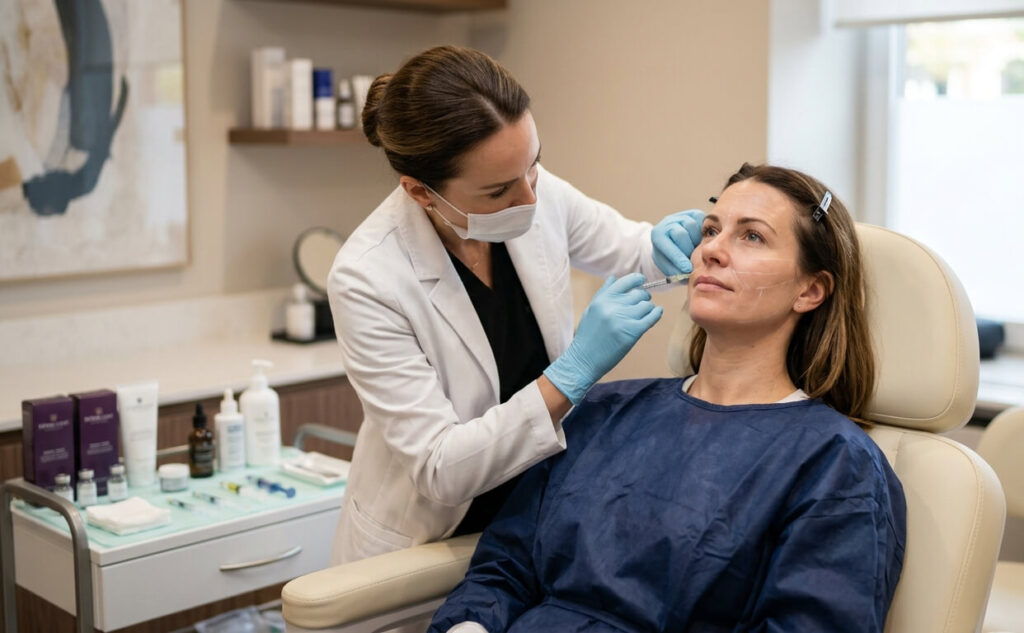
Injectables. Your provider cleans the area and may apply numbing cream. Many hyaluronic acid fillers contain lidocaine, which helps with comfort during placement. Neuromodulator injections use very fine needles and take only a few minutes. Filler involves more injection points and takes longer, and the provider usually checks symmetry and shape as they go. Most people describe a pinch or pressure, not significant pain.
Energy-based treatments. Procedures such as Morpheus8 involve a device passed over the skin, usually with numbing beforehand, and sensations of heat and mild stinging are common.
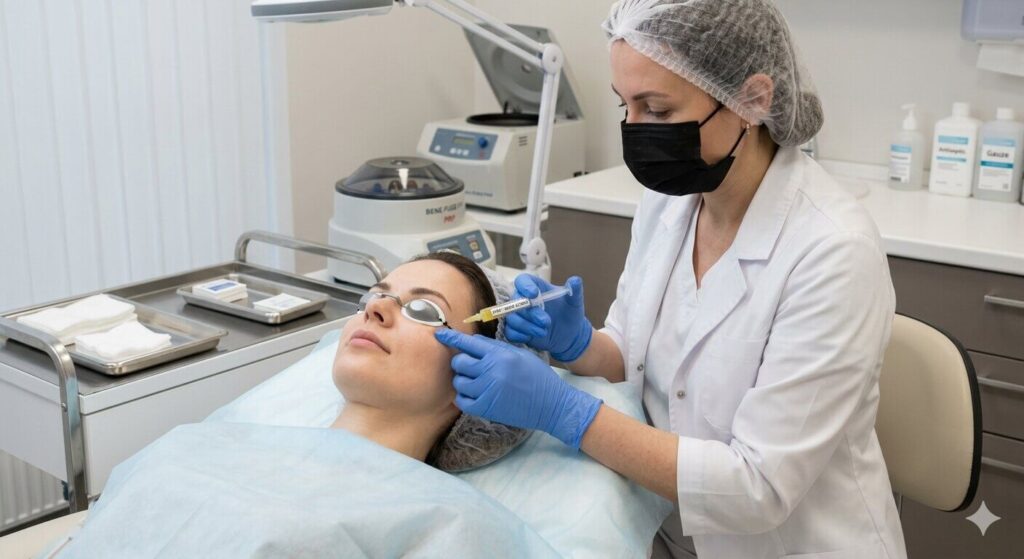
Blood-derived treatments. PRP and PRF involve a blood draw, processing and then placement of the preparation, so the appointment includes extra steps before the injection.
Tell your provider if something is uncomfortable. You can pause at any point.
Right after the appointment
Your provider will go through aftercare before you leave. General guidance for injectables is consistent across clinics.
For the first day or two, avoid touching, rubbing or pressing the treated area, since that can move product or irritate the skin. Avoid heat, such as saunas, hot yoga and very hot showers, and avoid strenuous exercise for about 24 hours, longer if your provider says so. After neuromodulators, many providers advise staying upright for a few hours. Skip alcohol the evening of treatment if you can, and avoid facials and massage on the treated area until your provider says it is fine.
Mild swelling, small bumps at injection points and bruising are common. Swelling tends to peak within the first two to three days and then settles. Cold compresses applied gently can help in the first day. Makeup can usually be applied once any injection marks have settled, but follow your provider’s instructions for timing.
What is normal and what needs a call
Redness, tenderness, mild swelling and bruising are expected. Some asymmetry in the first days is also common as swelling settles unevenly.
Contact the clinic promptly if you notice severe or increasing pain, skin that turns pale, white, gray or mottled, a spreading rash, signs of infection such as heat, spreading redness or discharge, or any change in vision. These are uncommon, and they need to be assessed the same day.
When results appear
Timelines differ by treatment, and your provider can give you the specifics.
Neuromodulators typically begin to work within a few days and settle at about two weeks. Fillers show their shape right away, with swelling hiding the final result for a few days. Collagen-stimulating treatments such as Sculptra build over weeks to months. Skin treatments that depend on healing, such as microneedling or Morpheus8, show gradual improvement as the skin renews.
Because early swelling and settling change the look, wait until the area has settled before judging a result. That is also why a check-in after a couple of weeks is often useful. Ask your provider at the end of the visit whether a follow-up is recommended for your treatment and how to reach the clinic with questions.
Questions worth asking
Ask which product is being used and why it suits your goal. Ask how much will be used and whether the plan is built gradually. Ask what you should expect over the next day, the next week and the next month. Ask what to do if something does not look right and how to reach the clinic after hours. Ask what maintenance would involve over a year, so the plan is clear from the start.
For a neuromodulator, ask about the number of units and the areas. Ervin Beauty lists Botox per unit, so the plan can be matched to the areas you want treated, and it helps to read that page before you arrive.
Common worries, answered plainly
Looking overdone. A good plan is conservative, and filler and neuromodulators can both be added in steps. Hyaluronic acid filler can also be dissolved if needed, which gives a safety margin.
Needles and pain. Numbing cream, lidocaine in the product and fine needles keep discomfort low for most people. Mention anxiety about needles at the start, because the provider can adjust the pace.
Not knowing what to ask for. You do not need the right terminology. Describing what you see in the mirror is enough, and the provider translates it into options.
Feeling pressured. You should never feel pushed toward more product or more treatments than you wanted. A consultation that feels rushed or salesy is a reason to pause.
Cost. Price depends on the treatment, the amount of product and the plan. Ask for the total in advance and ask about financing if that would help.
Time off. Most injectable treatments need little or no time away from normal life. If swelling or bruising would bother you at work or at an event, book on a day that gives you a quiet evening afterward, and tell your provider about any commitments in the following two weeks.
Frequently asked questions
How should I prepare for my first appointment?
Tell the clinic about your medical history, medications, supplements and allergies. Ask your provider before stopping any medication, avoid alcohol for 24 hours, and arrive with a clean face. Plan your appointment two to three weeks before any important event, since swelling and bruising are possible.
How long does a typical appointment take?
It depends on the treatment. At Ervin Beauty, listed times range from about 30 minutes for Botox to around an hour for treatments such as jawline filler, Sculptra and Radiesse. Allow a little extra time for a first visit, which includes a longer consultation.
Will it hurt?
Most people describe pinching or pressure, not significant pain. Numbing cream and lidocaine in many fillers reduce discomfort, and neuromodulator injections are quick and fine. Tell your provider if something is uncomfortable.
Can I go back to normal activities afterward?
Usually yes, with some precautions. Most people return to work the same day or the next. Avoid heat, strenuous exercise and pressure on the treated area for the first day or two, and follow the instructions your provider gives you.
What if I am unsure about a treatment after the consultation?
You can decide not to proceed. A consultation is a chance to ask questions and compare options, and a good provider respects a decision to wait.