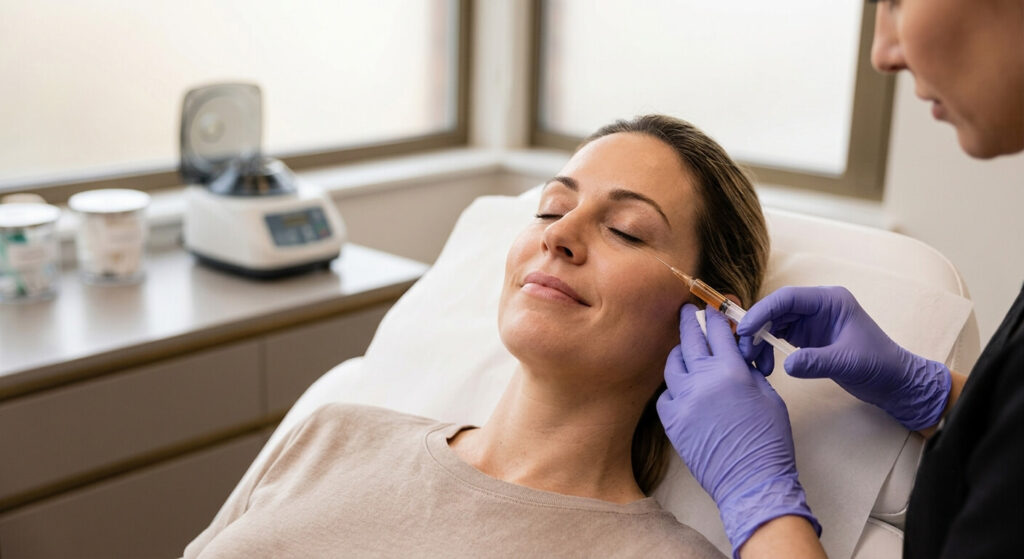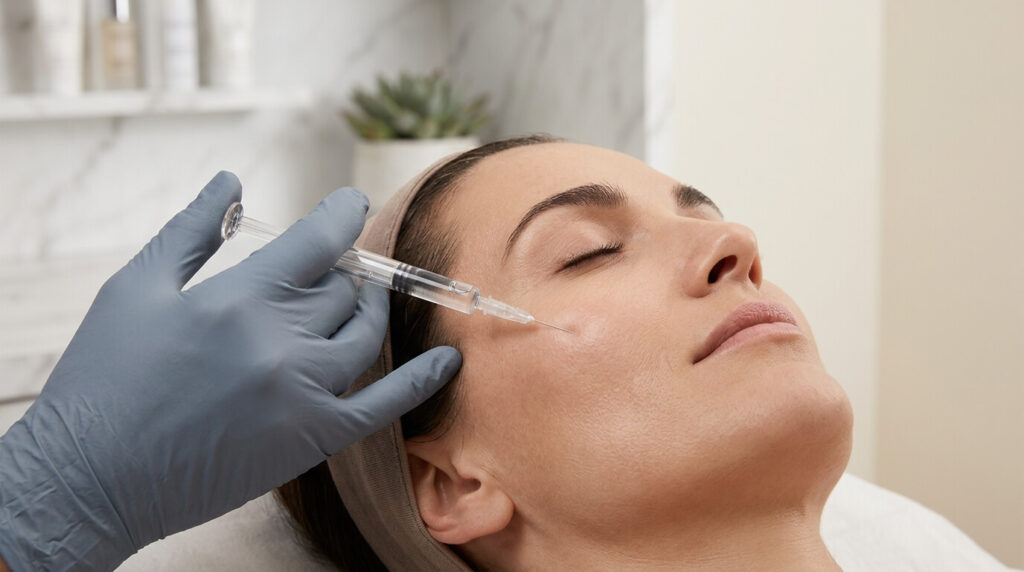
Most of what patients read about Endolift focuses on what the treatment does. Far less is written about what happens afterward — what the swelling actually looks like on day two versus day five, when it’s reasonable to expect people to stop noticing anything happened, and why the visible result at one week has almost nothing to do with the result at three months.
Recovery is not a single number. It’s a sequence, and the sequence matters more than any headline downtime figure for anyone deciding whether the timing works for their schedule.
The Recovery Window at a Glance
| Timeframe | What’s typical | What’s usually fine to resume |
| Day of treatment | Tightness, warmth, mild redness at entry points | Driving home, light activity |
| Days 1–2 | Swelling builds, bruising may appear | Desk work, low-key errands |
| Days 3–5 | Swelling declines, bruising fades toward yellow-green | Most social settings without concealment |
| Week 2 | Visible signs largely resolved; early tightening noticeable | Exercise and full normal routine (provider-confirmed) |
| Weeks 3–8 | Little visible change; internal collagen remodeling underway | Everything — this is a maintenance phase, not a restricted one |
| Months 2–6 | Progressive tightening and contour improvement | N/A — this is the results phase, not a recovery phase |
The table above reflects the typical pattern for a single-area facial treatment. Neck and under-chin treatment, or more advanced correction requiring higher energy and more vectors, can shift the earlier rows later by a few days.
What Recovery Depends On
Two patients treated with the same device can have noticeably different recovery experiences, and the reasons are specific rather than random.
Treatment area. The neck and under-chin region tend to swell more visibly than the cheeks or jawline, simply because the tissue there is looser and more prone to fluid retention. A patient treated only along the jawline often has an easier first week than one treated under the chin and neck together.
Number of vectors and treatment intensity. Endolift works by passing a thin optical fiber beneath the skin along multiple paths, or vectors, within the treatment zone. More vectors and higher energy settings — typically used for more pronounced laxity — produce a stronger structural effect, but also more initial inflammation. A provider treating early, mild laxity conservatively will generally leave a patient with less visible swelling than one addressing more advanced changes.
Individual healing response. Some of this is simply biology. Patients who bruise easily from routine blood draws or minor bumps tend to bruise more visibly after Endolift as well. Skin thickness, circulation, and even hydration level in the days before treatment all play a role.
Combination treatments. When Endolift is performed alongside another procedure — a biostimulator injection, for instance — the recovery window reflects both treatments rather than Endolift in isolation, and the timeline below should be read as the Endolift-specific baseline.
With those variables in mind, here is what the recovery window generally looks like when Endolift is performed as a standalone treatment.
Day of Treatment
The procedure itself is performed under local anesthesia, so there’s no grogginess or recovery from sedation to plan around. Most patients drive themselves home or return to light activity the same day.
Immediately after treatment, the treated area will look and feel different from normal — some tightness, mild swelling, and often a sensation of warmth in the tissue that was treated. This is the immediate thermal effect of the laser and is expected rather than a sign of anything wrong. Redness at the entry points, which are smaller than a millimeter, is common and typically resolves within hours.
Most patients describe the sensation that evening as tender rather than painful. Over-the-counter pain relief is rarely necessary beyond the first night, if at all, though providers will give specific guidance based on the areas treated.
Days 1–2
This is when swelling tends to build rather than fade — a pattern that surprises patients expecting the opposite. Swelling from any procedure that manipulates tissue under the skin typically peaks around 24 to 48 hours, not immediately, as the body’s inflammatory response reaches its height.
Bruising, if it develops, usually becomes visible during this window as well. Its extent depends heavily on the area treated and individual factors described above — some patients have none, others have moderate bruising that’s noticeable without makeup.
Cold compresses applied intermittently (rather than continuously) during the first 24 to 48 hours help manage both swelling and discomfort. Sleeping with the head slightly elevated for the first two nights reduces overnight fluid pooling, particularly for neck and under-chin treatment.
Most patients are comfortable with light daily activity — desk work, errands, low-key social plans — by day two, though visible swelling or bruising may still be apparent depending on the area treated.
Days 3–5
This is typically the turning point. Swelling that peaked around day two usually begins a steady decline through this window, and any bruising starts shifting into the yellow-green fading stage rather than the more visible purple of the first days.
This aligns with the downtime window most providers quote for Endolift — mild swelling and bruising resolving within three to five days for the majority of patients. By day five, most people treated in a single area (jawline or lower face, for example) are comfortable in normal social settings without makeup specifically to conceal treatment effects, though this varies by individual and by the intensity of the treatment performed.
Patients treated more aggressively, or in the neck and under-chin together, sometimes need closer to the full week before reaching this point. This is a reasonable range to expect, not a sign that anything unusual happened.
Strenuous exercise, saunas, and activities that significantly raise body temperature or blood pressure are typically still restricted during this window, as they can prolong swelling.
Week 2
By the second week, most visible signs of the procedure — swelling, bruising, tenderness — have resolved for the majority of patients. The skin generally looks and feels close to normal at rest, though the treated tissue underneath is still in an active healing phase that isn’t visible from the outside.
This is also when patients typically notice the first real signal of the treatment’s effect: a subtle tightening or improved contour that’s distinct from the initial post-procedure swelling. It’s worth being clear about what this is and isn’t — it reflects the immediate thermal contraction of collagen fibers that occurs during treatment, not the full collagen remodeling process, which unfolds over a much longer timeline.
Most restrictions on normal activity, including exercise, are typically lifted by this point, though providers give individualized guidance based on what was treated.
Weeks 3–8: The Quiet Middle Phase
This is the least discussed part of Endolift recovery, largely because there’s little to see. The visible healing is complete, but the biological process that produces Endolift’s longer-term results — new collagen and elastin production in the treated tissue — is ongoing beneath the surface.
Patients sometimes describe this period as anticlimactic: the swelling is gone, the early tightening from the procedure has settled, and the dramatic new collagen-driven change hasn’t fully materialized yet. This is expected. It’s also the period where patience matters most, because judging the final result too early tends to produce an inaccurate impression of what the treatment actually achieved.
Months 2–6: Progressive Improvement
This is where Endolift’s results actually take shape. As new collagen forms and existing fibrous tissue reorganizes in response to the treatment, the contour improvement becomes more defined and more structural than what was visible in the first weeks.
Most providers, including the guidance given for Endolift treatment at Ervin Beauty, describe the final result as fully visible in the three-to-six-month range, with continued subtle refinement possible beyond that. This is a longer timeline than many patients expect going in, largely because “recovery” in casual conversation tends to mean the first week, while the treatment’s actual outcome unfolds over months.
The practical implication is straightforward: photographs taken at two weeks are not a fair representation of what Endolift produces, and providers who show only immediate before-and-after images without a longer-term follow-up are not giving a complete picture of the treatment.
What Can Slow Recovery Down
A handful of factors reliably extend the visible recovery window beyond what’s typical:
Blood thinners and certain supplements. Aspirin, fish oil, vitamin E, and similar substances increase bruising risk and are typically advised against for a period before and after treatment, following provider-specific guidance.
Alcohol in the days immediately before or after treatment. Alcohol has a mild blood-thinning effect and can increase swelling and bruising when consumed close to the procedure.
Skipping aftercare instructions on activity level. Returning to intense exercise, hot yoga, or similar activity before swelling has resolved is one of the more common reasons recovery takes longer than expected.
Sun exposure on treated skin during the healing phase. Direct sun on skin that’s still healing from the entry points can affect how the skin heals and is generally avoided with appropriate sun protection.
None of these turn a normal recovery into a complicated one on their own, but each can noticeably extend the visible timeline, which is worth knowing before scheduling treatment around an event or a specific date.
When to Contact Your Provider
Most of what happens during Endolift recovery falls within the expected range described above, but a small set of symptoms warrants a call to the treating provider rather than waiting it out:
- Swelling that continues to worsen after day three or four instead of beginning to subside
- Pain that increases rather than gradually easing, or pain that isn’t controlled by the guidance provided at discharge
- Signs of infection at an entry point — spreading redness, warmth, or discharge, particularly if accompanied by fever
- Numbness or altered sensation that doesn’t begin improving within the first couple of weeks
- Asymmetry between treated areas that seems more pronounced than typical post-procedure swelling would explain
None of these are common outcomes of Endolift performed by an experienced provider, but knowing what falls outside the normal pattern is part of recovering responsibly from any procedure that works beneath the skin’s surface. A same-day call is always reasonable if something feels off — providers would rather field a question that turns out to be nothing than have a patient wait through a genuine concern.
Planning Around the Timeline
Patients often ask how far in advance of an event to schedule Endolift. Given that visible swelling and bruising typically resolve within three to five days, but the treatment’s fuller effect isn’t apparent for months, the honest answer depends on the goal.
For an event where the priority is simply looking like nothing was done, a week to ten days ahead of time is a reasonable buffer for most single-area treatments. For an event where the goal is to actually look different because of the treatment, Endolift needs to be scheduled months in advance — treating it as a long-term investment rather than a short-term fix produces a far more accurate set of expectations.
Frequently Asked Questions
Most providers advise waiting until the entry points have closed, typically within 24 to 48 hours, before applying makeup directly to those points. Makeup elsewhere on the face can usually resume sooner, following individual provider guidance.
Yes. A sensation of firmness or mild tightness in the treated tissue is common during the weeks when collagen remodeling is most active, and it typically softens as the tissue settles into its new structure over the following months.
Providers generally recommend waiting until the full result has developed — typically three to six months — before assessing whether a second treatment or a different approach is warranted, since judging the outcome earlier doesn’t reflect the treatment’s actual endpoint.
Neck and under-chin tissue tends to retain fluid more visibly than the cheeks or jawline, so swelling in that area can appear more pronounced initially, even though the overall downtime window is similar.
Active ingredients like retinoids and exfoliating acids are typically paused for a short period around treatment to avoid irritating skin near the entry points, with providers giving a specific timeline based on the products used and the areas treated.
Recovery from Endolift is straightforward for most patients, but it unfolds on a longer timeline than the visible downtime alone suggests. A personalized consultation is the most reliable way to understand what recovery will look like for a specific treatment plan — including how Endolift for the face and neck compares to a more limited treatment area, and how it fits into the fuller picture covered in our complete guide to Endolift Laser.